How to Cook Vegetables in an Air Fryer
Cook vegetables in an air fryer at 375°F to 400°F after cutting them into even pieces, drying them well, and arranging them in a loose layer. Shake or turn them during cooking, then check for tenderness before serving.
On this page (9 sections)
- How do you prepare vegetables for the air fryer?
- What temperature should you use for fresh vegetables?
- How should you load the air fryer basket?
- How do you cook different vegetables evenly?
- How does an oven-style air fryer change the process?
- Can you bake vegetables in an air fryer?
- What should you do after air frying?
- What common mistakes make vegetables cook poorly?
- What is the simplest method for fresh air-fryer vegetables?
Cook vegetables in an air fryer by cutting them evenly, drying them well, using a light oil coating, and leaving space around each piece. Set the air fryer to 375°F to 400°F, shake or turn the vegetables partway through, and cook until browned outside and tender inside.
This method works for broccoli, cauliflower, carrots, zucchini, bell peppers, green beans, Brussels sprouts, mushrooms, and many other fresh vegetables. Cooking time changes with the vegetable and the size of each piece.
How do you prepare vegetables for the air fryer?
Wash, dry, trim, and cut vegetables into pieces of similar size. Even pieces finish at about the same time, while wet vegetables tend to steam instead of brown.
Pat the vegetables dry with a clean towel after rinsing. Remove tough stems, seeds, or damaged spots, then cut dense vegetables smaller than quick-cooking vegetables.
Toss the pieces with a small amount of oil and your chosen seasonings. Salt, pepper, garlic powder, paprika, dried herbs, and lemon zest can work well, but avoid adding wet sauces until near the end of cooking.
Can you cook veg in an air fryer without oil?
You can cook vegetables without oil, but a light coating helps seasonings cling and can improve browning. Use just enough to lightly coat the pieces, especially for vegetables that already contain a lot of moisture.
For a simple batch, toss 1 lb of prepared vegetables with 1 to 2 teaspoons of oil. Adjust the amount based on the vegetable and your preference.
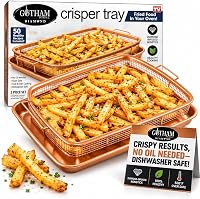
If you want a wide cooking surface inside a conventional oven, the basket air fryer option uses a raised basket and baking sheet. Its 2-piece design is made for oven air frying, baking, roasting, and crisping.
The GOTHAM STEEL basket is a fit for cooks who want a larger tray-style setup rather than a small drawer basket. Its 3-quart size gives you room to spread food, and the set is dishwasher safe.
Measure your oven before ordering because the tray is 16.5 x 12.5 in.
What temperature should you use for fresh vegetables?
Use 375°F to 400°F for most fresh vegetables. Choose the lower end when pieces are small or prone to drying, and the higher end when you want stronger browning.
Start with these general ranges:
- Broccoli and cauliflower: 375°F to 400°F for 8 to 14 minutes
- Zucchini and yellow squash: 375°F for 8 to 12 minutes
- Bell peppers and onions: 375°F to 400°F for 8 to 14 minutes
- Green beans: 375°F to 400°F for 8 to 12 minutes
- Carrots: 375°F for 12 to 18 minutes
- Brussels sprouts: 375°F to 400°F for 12 to 18 minutes
- Potatoes: 400°F for about 15 to 25 minutes, depending on size
These are starting points, not fixed rules. Check early when using thin slices or a small batch, and add time in 2- to 3-minute steps.
For better timing, put dense vegetables in first and add quick-cooking vegetables later. You can also cook each type separately when the pieces need very different times.
How should you load the air fryer basket?
Arrange vegetables in a loose, mostly single layer. Air needs to move around the pieces, so a crowded basket can leave the centers soft and the surfaces pale.
Leave small gaps between pieces when possible. If you need to cook a large amount, use multiple batches rather than filling the basket above its practical cooking area.
Shake the basket halfway through cooking, or turn larger pieces with tongs. This exposes more surfaces to the hot air and helps the vegetables brown more evenly.
A mesh strainer can help rinse and drain vegetables before seasoning. The Cuisinart Mesh Strainers set includes 3 stainless steel sizes, from 3⅛ in to 7⅞ in, and each is dishwasher safe.
Choose this set if you want different strainer sizes for small rinses, grains, sauces, or larger vegetables. The strainers are stainless steel and dishwasher safe, but they are preparation tools, not air fryer baskets.
How do you cook different vegetables evenly?
Group vegetables by density and moisture. Potatoes, carrots, and Brussels sprouts need more time than zucchini, mushrooms, or bell peppers.
Cut potatoes and carrots into smaller pieces than zucchini so they can finish together. Halve Brussels sprouts or cut large ones into quarters.
Keep mushrooms in larger pieces because they shrink as they release moisture.
For broccoli and cauliflower, use medium florets with similar thickness. For green beans, trim the ends and keep the beans in a single layer where possible.
Frozen vegetables need a slightly different approach because they release water as they heat. Follow our guide to how to cook frozen vegetables in an air fryer when working from the freezer.
If you are cooking potatoes, our guide explains how to air fry a baked potato when you want a whole potato rather than small pieces. For a crisp potato side, see how to cook hash brown patties in an air fryer.
How does an oven-style air fryer change the process?
An oven-style air fryer gives you more usable space, but it may need more attention to rack position and batch size. Keep the food exposed to moving hot air, and follow the appliance's instructions for the air-fry rack or basket.
The Breville BOV900BSS Smart Oven Air Fryer Pro has a 16 x 13.5 x 7 in interior, 13 cooking functions, and a mesh basket rack for air frying and dehydrating. Its super convection setting uses a 2-speed fan, and the oven has 1,800 watts of power.
This Breville suits cooks who want air frying alongside baking, roasting, reheating, and dehydrating. It includes 2 oven racks, a 13 in pizza pan, a 9 x 13 in broil rack and enamel roasting pan, and a mesh basket rack.
Its 30.2 lb weight and 21.5 in width make counter space important.
For more appliance features and capacity considerations, compare our best air fryer for vegetables guide. A larger oven may suit family portions, while a compact basket can be easier for one or two servings.
Can you bake vegetables in an air fryer?
Yes, you can bake vegetables in an air fryer by using a moderate temperature and allowing enough time for the centers to soften. Small pieces brown faster, while whole or dense vegetables need longer cooking.
Use 350°F to 375°F for vegetables that need to cook through without darkening too quickly. Raise the temperature near the end if you want more surface browning.
A little oil improves contact between the seasoning and the vegetables, but too much can make the basket smoky or leave the food greasy. Keep pieces dry and avoid pouring watery marinades into the basket.
If you want to explore another moist-heat method, read can you steam vegetables in an air fryer. Air frying and steaming produce different textures, so choose based on whether you want browning or softness.
What should you do after air frying?
Check the thickest piece before serving. It should be tender enough for your preference, with browned edges where expected.
If the outside is dark but the center is firm, lower the temperature and continue cooking briefly. If the vegetables are tender but pale, increase the heat for 1 to 3 minutes while watching closely.
Serve air-fried vegetables soon after cooking. Covering them tightly traps steam and can soften crisp edges.
Some air fryers can also dry food at low heat. Read can you dehydrate vegetables in an air fryer if you want a dried snack or longer storage method.
Dehydration is different from roasting and usually needs much more time.
What common mistakes make vegetables cook poorly?
Crowding, excess moisture, uneven cuts, and ignoring density are the main causes of poor results. Fixing those four issues usually improves browning and texture more than adding extra oil.
Avoid these mistakes:
- Putting wet vegetables directly into the basket
- Filling the basket so pieces overlap heavily
- Mixing thin zucchini with large potato chunks
- Adding wet sauce at the start
- Skipping the halfway shake or turn
- Cooking by time alone without checking tenderness
Air-fried vegetables work well beside other crisp foods, but each food may need its own timing. See how to air fry frozen French fries for a separate frozen-food method, and compare the best air fryer for tofu if tofu is part of your regular meals.
Vegetarian households may also want the best air fryer for vegetarians when choosing an appliance around vegetable-heavy cooking. For potato-focused meals, compare the best air fryer for French fries or learn how to make air fryer crisps.
What is the simplest method for fresh air-fryer vegetables?
Cut vegetables evenly, dry them, season lightly, and cook them at 375°F to 400°F in a loose layer. Shake or turn them halfway through and check the thickest piece before serving.
Choose a basket-style air fryer for quick small batches, or an oven-style appliance when you need more rack space and extra cooking functions. Use a tray-style basket when your countertop oven has enough room and you want a broad surface for vegetables.
Start with one vegetable at a time while you learn its cooking time. Once you know how quickly each type softens, combine vegetables with similar density and finish them together.
Frequently asked questions
What temperature is best for cooking vegetables in an air fryer?
Use 375°F for softer vegetables and smaller pieces, or 400°F when you want more browning. The best setting depends on the vegetable, cut size, and moisture.
Start checking early, because thin pieces cook faster than dense chunks.
Do you need to boil vegetables before air frying?
Usually, no. Fresh vegetables can go straight into the air fryer after washing, drying, cutting, and seasoning.
Parboiling may help dense vegetables such as potatoes or carrots cook more evenly, but it is not required for every recipe.
How do you stop air-fried vegetables from getting soggy?
Dry the vegetables thoroughly, avoid crowding the basket, and use only a light coating of oil. Cook in batches when needed, shake or turn the pieces, and serve soon after cooking so steam does not soften the browned surfaces.