Are Grill Brushes Safe?
Grill brushes can be safe when the bristles and handle are intact, but loose wire bristles can create a serious food safety risk. Inspect the brush before every use and consider a bristle-free scraper or soft tool for delicate surfaces.
On this page (7 sections)
- Are grill brushes safe with wire bristles?
- Why do grill brush bristles come loose?
- What is a safer alternative to a wire grill brush?
- Are bristle-free grill brushes safe for outdoor grates?
- How should you inspect a grill brush?
- Can grill brushes damage indoor or coated surfaces?
- What is the safest grill-cleaning choice?
Grill brushes can be safe when they are intact and matched to the grill surface, but loose wire bristles can stick to grates and food. Inspect the brush before every use, replace worn tools promptly, and choose a bristle-free scraper or soft brush when reducing wire risk matters most.
The main concern is not the act of brushing. It is brush wear.
Repeated pressure, heat, grease, and contact with rough grates can bend or loosen bristles over time.
Are grill brushes safe with wire bristles?
Wire grill brushes are not risk-free because individual bristles can detach. A loose bristle may remain on the grate, transfer to food, and be swallowed without being noticed.
Check the brush head before cleaning. Look for missing wires, uneven rows, bent sections, rust, loose connections, and a handle or scraper that has started to separate.
After brushing, wipe the grate with a clean cloth or paper towel if the surface allows it. Check the cooking area under good light, then inspect the food before serving.
Do not keep using a brush simply because it still removes grease quickly. Fast cleaning does not show that the head is still secure.
Why do grill brush bristles come loose?
Bristles can loosen when the brush head wears or when force pulls wires out of their frame. Heavy pressure may speed up cleaning, but it can also increase wear on both the brush and the grate.
Heat can make cleaning easier because grease softens. It also means you need a handle long enough to keep your hands away from the hot surface and enough control to avoid slipping.
Rough, chipped, or heavily coated grates can catch bristles. A brush that bends sharply at one section may be near the end of its useful life.
Clean the brush after use and store it where the head will not be crushed. Do not use a tool with a loose head, cracked handle, or missing parts.
What is a safer alternative to a wire grill brush?
Bristle-free grill cleaners and soft surface brushes remove food without loose metal wires. They may need more passes or more scraping, but they reduce one specific risk.
A wide scraper helps lift stuck residue from the top of the grate. A helix-style bristle-free tool can reach around grate edges, while a soft brush suits indoor appliances and non-stick surfaces.
The trade-off is cleaning speed. Wire brushes can cut through stubborn buildup quickly, while bristle-free tools often rely more on pressure, repeated passes, and softened grease.
For a broader look at how to clean a grill without a wire brush, use a scraper, approved soft brush, steam method, or the cleaning method recommended by your grill manual.
Which soft brush suits indoor grills?
The OXO Good Grips Electric Indoor Grill has soft, flexible bristles for air fryers, electric indoor grills, stovetop griddles, and waffle makers. Its heat-resistant silicone wiper blade helps remove food and grease from delicate surfaces.
The handle is silicone and designed to stay comfortable and non-slip when wet. The brush measures 4.2 x 2.05 x 10.4 inches and weighs 4.96 ounces.
Use it for indoor appliances and non-stick cookware where a stiff outdoor grill brush would be too aggressive. OXO states that it is not for outdoor grills, so choose an outdoor-rated tool for a charcoal, gas, or smoker grate.
Readers comparing tools for a pressed sandwich maker can also see our guide to best panini grill brushes.
Are bristle-free grill brushes safe for outdoor grates?
Bristle-free outdoor cleaners remove the loose-wire concern, but they still require surface care. Use controlled pressure, follow the grate material guidance, and inspect the cleaner for wear before each use.
A scraper should not be treated as a metal chisel. If it catches on a grate or coating, reduce pressure and soften the residue first.
Which bristle-free cleaner fits a full-size grill?
The Grill Brush & Bristle Free Outdoor BBQ Scraper, Safe 18'' Stainless Cleaner uses a bristle-free helix design and includes a wide scraper. It is designed for metal and porcelain grill surfaces and has an 18-inch length.
Its stainless steel material and medium firmness suit readers who want a longer outdoor tool without wire bristles. The design may require more work than a traditional wire brush on baked-on residue, which is the main trade-off for the bristle-free approach.
Use the scraper across the grate instead of digging into one spot. The handle is intended to keep hands farther from heat, but you should still use normal grill safety practices.
The product data includes a 14.4-ounce weight and a square shape. Check the grill manual before using any cleaner on coated grates.
What if you want wire cleaning speed with a scraper?
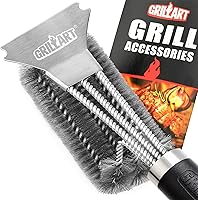
The GRILLART Grill Brush Outdoor BBQ Scraper combines 3 rows of stainless-steel bristles with a scraper and an 18-inch stainless steel handle. Its medium firmness and rectangular shape are intended for grill cleaning, including porcelain surfaces.
GRILLART describes the bristles as tightly twisted into the frame to reduce shedding. That does not remove the need for inspection, because any wire brush can wear during use.
The 18-inch handle gives you more distance from a hot grate. Use light, controlled pressure and replace the brush if bristles bend, flatten, or detach.
This style may suit readers who value quick removal of stubborn residue and accept the added maintenance required by wire bristles. For a comparison of tools that pair a brush with a scraper, see best grill brushes with scrapers.
How should you inspect a grill brush?
Inspect the head, handle, scraper, and connection points before and after cleaning. A quick check is more useful than relying on the brush's age or appearance alone.
Look for these warning signs:
- Missing or loose bristles
- Bent wires that no longer sit evenly
- A flattened or damaged brush head
- Cracks in the handle
- A loose connection between the head and handle
- Rust, sharp fragments, or exposed edges
- A scraper that has become rough or chipped
Run a clean cloth over the brush head only if the tool is cool and safe to handle. If fibers catch or pull, retire the brush.
Never leave a worn brush beside the grill for someone else to use. Mark it for disposal and replace it with a cleaner suited to the cooking surface.
Can grill brushes damage indoor or coated surfaces?
Yes, a stiff brush or scraper can damage non-stick, porcelain, or delicate cooking surfaces. Match the tool to the surface before applying pressure.
Indoor electric grills often have plates with ridges, channels, or coatings that need a softer tool. Our guide to how indoor electric grills work explains why removable plates, heating parts, and grease paths affect cleaning choices.
A soft brush with flexible bristles can reach ridges without the same scraping force used on an outdoor grate. Keep electrical parts dry and follow the appliance manual for removable plates and cleaning products.
A porcelain grate needs controlled pressure as well. Stop if the brush catches, the coating chips, or the grate changes texture.
The word “smokeless” also does not describe a cleaning method. Learn what smokeless means on an indoor grill before assuming the appliance can handle any brush or degreaser.
What is the safest grill-cleaning choice?
Choose a bristle-free cleaner when avoiding loose wires is your first priority. Choose a soft brush for indoor grills and non-stick surfaces, or a wire brush only when you will inspect and replace it carefully.
Pick the OXO tool for indoor electric grills, panini presses, griddles, waffle makers, and delicate surfaces. Pick the Weetiee cleaner for an outdoor bristle-free option with a wide scraper.
Pick the GRILLART brush if you want stainless-steel bristles, a scraper, and an 18-inch handle, with regular wear checks.
For a specific appliance, compare the tool with the surface before cleaning. Readers with Ninja appliances can also review best Ninja Foodi grill cleaning brushes.
The answer to are grill brushes safe depends on condition, surface, and cleaning method. Inspect wire brushes every time, replace damaged tools immediately, and use a bristle-free or soft cleaner when the lower wire risk is worth the extra cleaning effort.
Frequently asked questions
Are grill brushes with wire bristles safe?
Wire grill brushes can be used with care, but loose bristles may stick to grates or food. Inspect the brush before and after cleaning, replace it when wires loosen or the head wears, and wipe the grate before cooking.
A bristle-free scraper removes the loose-wire risk.
How often should you replace a grill brush?
Replace a grill brush as soon as bristles bend, loosen, flatten, or detach from the head. There is no useful fixed schedule because wear depends on brush design, grate material, cleaning pressure, and how often you cook.
A damaged brush should not stay in service for one more cook.
What is the safest way to clean a grill?
The safest method depends on the surface, but a bristle-free scraper or a soft brush made for non-stick cookware avoids loose metal wires. Let grease soften, scrape in the direction of the grates, remove debris, and inspect the cooking surface before adding food.
Can a grill brush damage porcelain grates?
Yes, a stiff or damaged brush can scratch or wear porcelain-coated grates, especially when you press hard. Use a tool labeled for porcelain, avoid aggressive scraping, and stop if the coating chips or the brush catches on the surface.