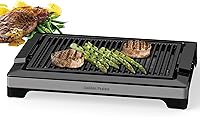
How to Use a PowerXL Smokeless Grill
To use a PowerXL smokeless grill, assemble it on a stable, heat-safe surface, add water to the drip tray if your manual calls for it, and preheat before cooking. Use the controls and cleanup steps in your model's manual.
On this page (7 sections)
- How do you set up a PowerXL smokeless grill?
- What do the PowerXL grill controls do?
- How do you cook on a PowerXL smokeless grill?
- What should you know about cleanup?
- Which indoor grill might suit a similar cooking routine?
- What should you check before using the grill again?
- How should you use a PowerXL smokeless grill?
To use a PowerXL smokeless grill, set it up as its manual directs, preheat it, cook in manageable batches, and clean it only after unplugging and cooling. “Smokeless” does not mean that no smoke or cooking odors can occur; food, grease, and residue can still smoke.
PowerXL has sold different indoor grill models, so controls, assembly, water-tray instructions, and cleaning rules can vary. Find the model number and follow its manual for exact settings and parts.
How do you set up a PowerXL smokeless grill?
Set up the PowerXL grill on a level, heat-safe counter with open space around it. For more space-conscious choices, see our indoor grills for apartments.
Before plugging it in, check the manual for the correct assembly, drip-tray position, and any water requirement.
Remove packaging and make sure the cooking surface and removable parts are clean and dry. Fit the parts together in the order shown in the manual, without forcing anything into place.
Some grill designs use a drip tray to catch grease, and some manuals may call for water in the tray. Do not assume that every PowerXL model uses water; check your model's instructions, and fill only to a marked line if one is given.
Keep the cord away from hot surfaces, sinks, and the edge of the counter. Place the grill where rising heat and steam will not reach cabinets or other items above it.
What do the PowerXL grill controls do?
The controls set how the grill heats, while any indicator lights show the status described in your model's manual. Use the control labels and manual for your exact unit, since the layout and signals can vary.
If the grill has a temperature dial, start with the setting recommended for the food or recipe. If it has buttons or a digital panel, use the manual to select a mode and set a cooking time where needed.
An indicator may show that the grill is powered or heating, but don't rely on a light as a food-safety check. Follow the manual's preheat instructions and use a food thermometer when a safe internal temperature matters.
How long should you preheat the grill?
Preheat for the time and setting specified in your PowerXL manual. If the manual says to wait for an indicator or a ready signal, use that cue before adding food.
Arrange the food and utensils before preheating so the hot grill doesn't sit unattended. Don't use an empty grill longer than the manual allows.
How do you cook on a PowerXL smokeless grill?
For more even cooking, preheat as directed, place food in a single layer, and leave space between pieces. Follow recipe guidance and your grill manual for cooking times, turning, and temperature settings.
Trim excess fat and use only the amount of oil the recipe needs. Too much fat or oil can drip onto hot parts and create smoke, even on a grill marketed as smokeless.
Avoid crowding the cooking surface. A full, overlapping layer can cook unevenly and makes it harder to turn food safely.
Turn or remove food with utensils suited to the grill's cooking surface. Metal tools can scratch some nonstick coatings, so check the manual and use an approved utensil if it specifies one.
How can you cook with less smoke?
Reduce smoke by removing old grease, avoiding excess oil, and keeping drippings within the tray. Cut away loose fat when appropriate, and clean the grill after it cools.
Use the appliance in a well-ventilated area. If smoke becomes heavy, turn off the grill if you can do so safely, unplug it when safe, and check the manual before using it again.
The term “smokeless” describes smoke reduction, not a guarantee that cooking creates no smoke. Our guide explains what smokeless means on an indoor grill and what to expect from indoor grilling.
What should you know about cleanup?
Unplug the grill and wait until it has cooled completely before cleaning. Grease and hot surfaces can cause burns, and water must stay away from electrical parts.
Remove only the parts your model's manual says are removable. Wash them with the method it allows, then dry them fully before reassembly.
Wipe the appliance body and controls with the method specified in the manual. Don't immerse the base, cord, or plug, and don't pour water over the heating element.
Avoid scraping a nonstick surface with a knife, wire brush, or abrasive pad. For general cleaning options, see how to clean a grill without a wire brush, and compare indoor grill cleaners if you need a cleaner made for the surface.
A grill brush designed for certain outdoor grates may not suit a coated indoor plate. Check the grill manual before using a grill rescue brush.
Which indoor grill might suit a similar cooking routine?
If you want a compact electric grill, the George Foreman 4-Serving Indoor Grill with Removable has removable dishwasher-safe plates and a 60 sq. in. cooking area.
If you want an indoor grill with a hood and adjustable heat, the Hamilton Beach Electric Indoor Searing Grill has a removable nonstick plate, removable hood, and drip tray, all dishwasher safe.
For another hooded option, the Hamilton Beach Electric Indoor Searing Grill includes a viewing window, adjustable temperature control, and a removable dishwasher-safe grill plate and drip tray.
Compare features with your counter space and cleanup preferences. For more choices, browse our guides to the best smokeless indoor grill, best small electric grill indoor smokeless, and best smokeless indoor grill for Korean BBQ.
What should you check before using the grill again?
Before each use, check that the appliance is clean, dry, correctly assembled, and free of visible damage. Confirm that the drip tray is in place and has been prepared as your manual directs.
Keep the grill away from water and avoid using it if the cord, plug, or appliance appears damaged. Contact the manufacturer for model-specific troubleshooting when a control, indicator, or heating part does not work as described.
For side dishes that don't need grill marks, a basket air fryer can handle a separate part of the meal. Choose it when you want a distinct cooking appliance for foods such as vegetables or fries.
How should you use a PowerXL smokeless grill?
Use your model's manual to guide assembly, water-tray setup, controls, and cleanup.
Preheat as directed, avoid excess oil and crowded food, and unplug the grill before cleaning. If you're choosing an alternative, compare the Hamilton Beach models for hooded cooking and the George Foreman model for removable plates.
Frequently asked questions
Do you add water to a PowerXL smokeless grill?
Check your exact model's manual for whether and where to add water. If it calls for water in the drip tray, fill only to the marked line and keep water away from electrical parts.
Don't operate the grill with a dry tray if the manual requires water, and don't overfill it.
How do you preheat a PowerXL smokeless grill?
Assemble the grill and plug it into a suitable outlet, then use the control setting and preheating time in your model's manual. If your model has an indicator light, wait for the signal the manual describes before adding food.
Keep the grill attended while it heats.
How do you clean a PowerXL smokeless grill?
Unplug the grill and let it cool completely before removing parts. Clean only the components and surfaces the manual identifies as washable, and keep the power cord, controls, and heating element dry.
Avoid abrasive tools that can damage a nonstick cooking surface.
Why is my PowerXL smokeless grill smoking?
Some smoke can come from food, grease, or residue hitting a hot surface, so check for excess oil, overflowing drippings, and old buildup. Use the ventilation and temperature guidance in your manual, and stop cooking if smoke becomes heavy or the appliance behaves abnormally.