Are Infrared Grills Better for Indoor Cooking?
Infrared grills can cook food quickly and brown it well, but they aren't automatically better for indoor cooking. The right choice depends on the grill's heat control, cooking area, smoke management, and the foods you make.
On this page (6 sections)
Infrared grills can cook food quickly and brown it well, but they aren't automatically better for indoor cooking. Your best choice depends on the grill's temperature control, cooking area, grease handling, and the foods you want to make.
Infrared heat reaches food as radiant energy from a heating element. That can make heating feel direct and intense, but the word “infrared” alone doesn't tell you how evenly a grill cooks, how much smoke it makes, or whether it fits your kitchen.
Are infrared grills better for indoor cooking?
An infrared grill is better for indoor cooking only if its design and controls match your needs. Direct radiant heat may help with fast browning, while a different electric grill may offer a more useful cooking surface or simpler temperature adjustment.
Infrared is a heating method, not a guarantee of a particular result. Grill size, element placement, surface design, lid, and temperature settings all affect how food cooks.
For indoor use, first confirm that the specific grill is made for indoor cooking. Don't bring an outdoor gas or charcoal grill inside.
Burning fuel indoors can produce carbon monoxide, an odorless gas that can be deadly. The CDC's carbon monoxide guidance explains the danger.
How does infrared heat affect grilling?
Infrared heating transfers radiant heat from an element to the food. This can warm the food quickly, but cooking speed and browning still depend on the grill and what you're cooking.
A grill may combine radiant heat with a hot plate, grate, or enclosed cooking space. Those design differences matter: contact with a hot surface can leave grill marks, while a lid can hold heat around the food.
Don't assume “infrared” means the grill reaches a specific temperature or cooks every food faster. Compare the stated temperature range and controls, and see how indoor electric grills work for a broader look at electric heating.
Can infrared grilling give you a better sear?
Infrared can help brown food when the grill delivers enough heat to its surface. A good sear also depends on dry food, sufficient preheating, and avoiding overcrowding.
Moisture on food can slow browning, and a crowded cooking area can make it harder for heat to reach each piece. Pat food dry when appropriate, leave room between portions, and follow the grill's instructions for preheating.
If you want more control over cooking levels, compare best indoor grills with temperature control. A temperature dial or range gives you a clearer basis for choosing than the word “infrared” alone.
Does infrared mean less smoke or grease?
No, infrared heating doesn't by itself prevent smoke or grease. Fat, sugary marinades, and food residue can still drip or burn, depending on the grill's design and how you cook.
Look for a removable drip tray and a cooking surface you can clean as directed. Trim excess fat when it suits the recipe, avoid overfilling the grill, and clean residue after each use.
A lid may help contain splatter, but it doesn't remove the need to manage grease. For apartment kitchens, also consider where the grill will sit and whether its instructions call for a clear space around it.
Our guide to budget grills for apartment dwellers covers space and everyday fit.
What should you compare before choosing?
Compare temperature control, usable cooking area, cleanup, and indoor-use instructions. These practical details tell you more about day-to-day fit than a heating label on its own.
Check whether the grill has adjustable settings or only a small number of modes. Wattage describes electrical power draw, while a temperature range describes the heat settings; they aren't interchangeable.
See the difference between indoor grill wattage and temperature range.
Measure the area where food actually sits, not just the grill's outside dimensions. This guide to usable cooking area explains why advertised capacity and the space available for food can differ.
If the grill heats unevenly or slowly, infrared may not be the issue. Check the setup and controls with why your indoor grill might not be heating up.
Which indoor grills help you compare the trade-offs?
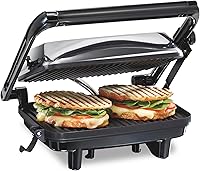
A conventional electric grill can be a useful comparison if you want clear controls or removable parts. These examples have different features, so match them to the cooking task rather than treating them as infrared substitutes.
The Hamilton Beach Electric Indoor Searing Grill has adjustable temperature control from 200°F to 450°F, a removable grill plate, a drip tray, and a lid with a viewing window.
The George Foreman 4-Serving Indoor Grill has a 60-square-inch cooking surface and removable plates that are dishwasher safe. Its stated features make it an option to compare if you value a compact contact-grill design and easier plate cleanup.
Neither description establishes how an infrared grill would perform beside these models. Compare each grill's own instructions, heat settings, size, and care requirements.
Can a timer help with indoor grilling?
A timer can help you keep track of cooking intervals, but it doesn't replace checking food for doneness. Use the grill's cooking guidance and a food thermometer for foods that need a safe internal temperature.
The eTradewinds timer counts up or down, has auto memory for repeated settings, and can sit on its kickstand or attach magnetically. It can help track a recipe's suggested cooking time while you prepare food in batches.
For timing options, see best kitchen timers for cooking. For meat doneness, use a thermometer and follow the USDA's safe minimum internal temperature chart; elapsed time alone can't confirm that food is safe.
Who should choose an infrared indoor grill?
Choose an infrared model if its indoor-use design, controls, size, and cleanup suit your cooking routine. It may be a good fit if you value direct radiant heat and the specific grill offers the settings and space you need.
Choose a conventional electric grill if its temperature range, removable plates, or drip tray better match your priorities. For either type, check the manual for indoor placement, ventilation, preheating, and cleaning instructions before buying.
The simplest rule for deciding whether infrared grills are better is to compare the features you can use: pick the grill with suitable heat control and cooking space, plus grease management you can maintain. If you cook meat, keep a meat thermometer for cooking nearby to check doneness safely.
Frequently asked questions
Are infrared grills safe to use indoors?
Use an infrared grill indoors only if its instructions say it is designed for indoor use. Indoor electric grills are different from outdoor gas or charcoal grills, which can create dangerous carbon monoxide indoors.
Follow the grill's placement, ventilation, and cleaning instructions.
Do infrared grills make less smoke?
Infrared heating alone doesn't guarantee less smoke. Smoke can come from fat or marinades dripping onto hot surfaces, so look for a drip tray and follow the grill's instructions for managing grease.
Trim excess fat and avoid letting residue build up.
What is the main benefit of an infrared grill?
The main benefit is direct radiant heat that can heat food quickly and support browning. Results depend on the grill's design, temperature control, food thickness, and distance from the heating element, so infrared doesn't guarantee a better sear or shorter cooking time.
Is an infrared grill better than a regular electric grill?
Neither type is always better. Infrared can suit cooks who value fast, direct heat, while a conventional electric grill may be easier to choose when you want adjustable settings, a removable plate, or a larger cooking area.
Compare those features with your usual meals and kitchen space.