How Long to Grill Burgers
Most burgers take about 8–12 minutes on a grill, turning once halfway through, but thickness and grill design change the timing. Use a food thermometer to check the center rather than relying on time or color.
On this page (9 sections)
- How long to grill burgers on a grill?
- How does patty thickness change cooking time?
- How does grill design affect burger timing?
- What grill temperature should you use for burgers?
- How do you know when burgers are done?
- Does a timer help when grilling burgers?
- What changes the time besides thickness?
- How long should burgers rest after grilling?
- How long to grill burgers: what should you remember?
Most burgers take about 8–12 minutes to grill, turning once halfway through, but the exact time depends on patty thickness and grill design. Check the center with a food thermometer, since timing and browning alone don't confirm that ground beef is safely cooked.
For a ½-inch patty on an open grill over medium heat, start checking around 8 minutes. A thicker patty or a grill that heats unevenly may need longer, while a contact grill cooks both sides at once.
How long to grill burgers on a grill?
A ½-inch-thick burger often takes about 8–12 minutes over medium heat on an open grill. Turn it once halfway through, then check the center with a thermometer.
That timing is a starting point, not a guarantee. Wind, cold meat, crowded grates, and a grill that has not fully preheated can all slow cooking.
A useful time range for open-grill patties is:
| Patty thickness | Starting time over medium heat |
|---|---|
| ½ in | About 8–12 minutes total |
| ¾ in | About 10–14 minutes total |
| 1 in | About 12–16 minutes total |
These ranges assume one turn and steady heat. Use a thermometer to decide when the burger is done, not the table alone.
How long do thin burgers take to grill?
Thin patties cook quickly, so start checking them after about 4 minutes per side. They can dry out if you leave them on the grill while waiting for a thick burger to finish.
Keep thin patties in a separate area or batch if your grill has hot and cool zones. Move each burger off as soon as it reaches a safe temperature.
How long do thick burgers take to grill?
A thick burger may need 12–16 minutes or more, depending on heat and grill design. Use steady medium heat so the outside has time to brown without becoming too dark before the center cooks.
Avoid pressing the patty with a spatula. Pressing releases juices and doesn't make the center cook safely faster.
How does patty thickness change cooking time?
Thicker patties need more time because heat takes longer to reach the center. A burger twice as thick will not cook in twice the time exactly, but it should be checked later than a thin patty.
Shape patties to an even thickness so the edges and middle finish closer together. If the center is much thicker than the edges, the outside may overcook while the middle catches up.
Use similar-sized patties in one batch. When they differ, check each one separately and remove them as they reach the target.
How does grill design affect burger timing?
A grill that heats both sides at once can cook burgers faster than an open grill, but the actual time still depends on thickness and heat. Leave space around patties so the grill can heat them evenly.
On an open charcoal or gas grill, you cook one side at a time and may need to move burgers between hotter and cooler areas. A covered grill holds more heat around the food, while a contact grill brings a heated plate down onto the top of the patty.
Indoor electric grills vary in heat and plate layout. Learn how indoor electric grills work before choosing a cooking time for a particular design.
Does a contact grill cook burgers faster?
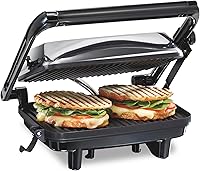
A contact grill can reduce cooking time because its top plate heats the burger while the bottom plate cooks it. Check early, especially with thin patties, and use the appliance's instructions for food placement and settings.
A compact grill may have less room to spread out several patties. Cooking too many at once can crowd the surface and slow browning.
The George Foreman 4-Serving Indoor Grill with Removable has a 60-square-inch surface and removable plates. Its listed capacity is four servings, which can help you plan a batch without crowding the cooking area.
A contact grill also differs from a flat cooking surface. See how an electric grill differs from an electric griddle if you are comparing those styles.
Does an infrared grill cook burgers faster?
Infrared grills can heat food differently from standard electric or gas grills, so timing may vary by design. Don't assume an infrared setting means a burger is done sooner; check the center with a thermometer.
Compare the tradeoffs in whether infrared grills are better for indoor cooking. The right choice depends on the cooking surface, temperature control, and the kinds of food you plan to grill.
What grill temperature should you use for burgers?
Use steady medium heat as a practical starting point for burgers. Very high heat can brown the outside quickly before the center is ready, especially on thick patties.
Grill temperature labels and dial settings don't always match the heat at the cooking surface. Read how hot grills get to understand why a preheat setting alone can't tell you how fast a burger will cook.
If your grill runs hot or has uneven zones, adjust the heat and move patties as needed. Our guide to how to control grill temperature covers ways to manage hot and cool areas.
For indoor cooking, a grill with adjustable temperature settings can make it easier to repeat a setting. The best indoor grills with temperature control page compares options with that feature.
The Hamilton Beach Electric Indoor Searing Grill has adjustable temperature control from 200°F to 450°F, plus a preheat light. Its lid and viewing window let you see the cooking surface while the grill is closed.
If an electric grill seems slow, first confirm that it has preheated and is set correctly. See why an electric grill may not get hot enough for common checks.
How do you know when burgers are done?
Check that ground beef reaches 160°F (71°C) in the center. Insert an instant-read thermometer through the side of the patty so the probe reaches the middle.
Check every burger, since thickness and position on the grill can change how quickly each one cooks. If the reading is below 160°F, return the patty to the grill and check again after a short interval.
Color is not a reliable safety check. A browned exterior or clear-looking juices don't confirm the center has reached a safe temperature.
Keep raw patties and cooked burgers on separate plates, and wash hands and utensils after they touch raw beef. Don't put cooked food back on a plate that held raw meat.
Does a timer help when grilling burgers?
A timer helps you remember when to turn or check burgers, but it can't tell you when the center is safely cooked. Set a reminder based on the patty thickness and grill type, then verify doneness with a thermometer.
The eTradewinds Elegant Digital Kitchen Timer Stainless Steel counts up or down to 99 minutes and 59 seconds and has auto memory for repeated tasks.
Use the timer for a halfway reminder or an early doneness check. Don't treat the alarm as a substitute for measuring the center temperature.
What changes the time besides thickness?
Preheat, spacing, starting temperature, and heat consistency all affect burger timing. Give the grill time to reach its cooking temperature, and leave enough room between patties for heat to circulate.
Cold patties may take longer than patties brought briefly toward room temperature, but don't leave raw ground beef sitting out for an extended period. Follow safe food handling guidance and keep raw meat chilled until you are ready to cook.
A dirty grate can cause sticking and uneven contact. Clean it as directed for your grill, then lightly oil the food or surface only if the appliance instructions allow it.
How long should burgers rest after grilling?
Let burgers rest for a few minutes after cooking so the juices settle. Resting does not replace checking that ground beef reached 160°F in the center before you take it off the grill.
Use a clean plate and avoid stacking patties tightly. Serve promptly, and refrigerate leftovers within 2 hours, or within 1 hour when the air temperature is above 90°F.
How long to grill burgers: what should you remember?
For ½-inch patties, start with about 8–12 minutes on an open grill and turn once halfway through. Give thicker burgers more time, check contact-grill burgers early, and use a thermometer to confirm 160°F in the center.
Choose a timer if you need a turn reminder, and choose an indoor grill with adjustable heat if repeatable settings matter. If you cook for one, see the guide to the best indoor grill for one before choosing a cooking surface.
Frequently asked questions
How long do burgers take to grill?
Many ½-inch-thick burgers take about 8–12 minutes over medium heat, with one turn halfway through. Grill design, starting temperature, and patty thickness affect the time, so check the center with a food thermometer and follow a safe temperature guideline for ground beef.
How long should you grill burgers on each side?
For a ½-inch patty, a useful starting point is about 4–6 minutes per side over medium heat. Thicker patties need more time, while a hot contact grill cooks both sides at once; use a thermometer because timing alone can't confirm doneness.
Does a covered grill cook burgers faster?
A covered grill traps heat around the burger and can cook it faster or more evenly than an open grill, especially when the lid fits closely. The effect depends on the grill and heat setting, so check the center early and avoid assuming the surface color tells you the inside is done.
What temperature should a burger reach?
Ground beef should reach 160°F (71°C) in the center for food safety. Insert an instant-read thermometer through the side into the thickest part of the patty, and check each burger because patties can vary in thickness and finish at different times.