How to Clean a Grill Brush
To clean a grill brush, remove trapped food and grease, wash it using a method suited to its materials, and let it dry completely. Inspect the head and handle for damage before using it again.
On this page (7 sections)
- How do you clean a grill brush step by step?
- How do you remove grease and trapped debris?
- How should you clean a wire grill brush?
- How do you clean a bristle-free grill brush?
- How do you inspect a grill brush for wear?
- How should you store a grill brush after cleaning?
- What is the safest cleaning routine for a grill brush?
To clean a grill brush, remove trapped food and grease, wash it using a method suited to its materials, and let it dry completely. Inspect the head and handle for wear before the next cook.
Start only after the brush and grill have cooled. Cleaning the brush after each use makes it easier to spot loose wires, packed grease, or a damaged head before the brush touches food again.
How do you clean a grill brush step by step?
Cool the brush, clear loose debris, wash the head, rinse it, and dry it fully. Check the care instructions for the brush, especially if it combines metal, plastic, silicone, or other materials.
- Let the brush cool completely after cleaning the grill.
- Remove visible food bits from the head over a trash can.
- Wash the head with warm water and dish soap, using a separate soft brush or cloth to work through residue.
- Rinse until soap and grease are gone.
- Shake off water and leave the brush to air-dry completely before storing it.
Don't put a brush in a dishwasher unless its maker says that method is suitable. Avoid soaking a handle or joint if the instructions warn against it.
How do you remove grease and trapped debris?
Loosen the debris before washing so you can see what remains in the head. Use a separate soft brush or cloth to work through the spaces between bristles or around a scraper edge.
For a wire brush, check between the bristles for food that may be difficult to see. Don't pull at a wire that appears loose; stop using the brush and inspect the whole head.
For a bristle-free brush, clear residue from around its cleaning surface and scraper. Follow the brush's care guidance if the head has a shaped or flexible section.
Is a grill brush safe to use on indoor grills?
Use a brush intended for the indoor grill's cooking surface. Non-stick coatings can be damaged by a tool that is too abrasive, so follow the appliance maker's cleaning instructions.
The OXO Good Grips Electric Indoor Grill brush has soft, flexible bristles and a heat-resistant silicone wiper blade for food and grease. It is intended for indoor grills, air fryers, stovetop griddles, and waffle makers, and not for outdoor grills.
For a panini press, see our guide to the best panini grill brush. You can also learn how indoor electric grills work before choosing a cleaning tool for the cooking surface.
How should you clean a wire grill brush?
Wash a wire brush after clearing debris, then inspect every part of the head before using it again. Loose or missing wires are a reason to stop using the brush.
Use warm, soapy water and a separate soft brush to dislodge remaining food and grease. Rinse the head carefully, dry it completely, and store it where the wires won't be crushed or bent.
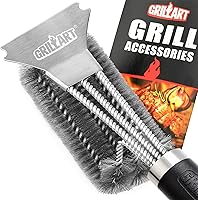
The GRILLART outdoor brush has three rows of stainless-steel bristles and a scraper. Check around the bristle head and scraper after cleaning, and don't use it if wires are loose or the head is damaged.
For brushing technique and a careful inspection routine, read how to use a wire brush to clean a grill. If you'd rather avoid wire bristles, see how to clean a grill without a wire brush.
How do you clean a bristle-free grill brush?
Clear grease and food from the cleaning head and scraper, then wash and dry them according to the maker's care instructions. A bristle-free head still needs inspection for wear, loose parts, or trapped debris.
The Weetiee grill cleaner uses a flexible helix with a wide scraper and has no wire bristles. Its maker notes that bristle-free brushes may not clean as quickly as wire brushes, so check the grate after cleaning and repeat the pass where residue remains.
Compare options in our guide to the best grill brush and scraper. Clean the scraper edge and the spaces around the helix, where grease can collect after use.
How do you inspect a grill brush for wear?
Check the head, cleaning surface, joints, and handle before each use. Replace the brush if wires are loose or missing, the head is cracked or bent, or the handle feels unstable.
Run your eyes over the bristles rather than using your fingers to test for loose wires. Check that the head stays firmly attached and that a scraper edge has no damage that could affect cleaning.
After washing, inspect again once the brush is dry. Water and grease can hide damage, while drying makes it easier to see whether the brush is ready to store.
How should you store a grill brush after cleaning?
Store a fully dry brush where its head won't get crushed or contaminated. Keep it away from food-contact surfaces and protect the bristles or cleaning head from bending.
Hang it by its handle if the brush has a hanging loop, or place it in a clean, dry utensil area. Don't store it while wet, since trapped moisture can linger around the head or joints.
Keep outdoor grill tools separate from tools meant for non-stick indoor surfaces. A brush intended for outdoor grills may be too abrasive for delicate cookware.
What is the safest cleaning routine for a grill brush?
For the safest routine, clean the brush after it cools, remove trapped grease and debris, dry it fully, and inspect it before the next use. Choose the cleaning method based on the brush materials and the care instructions.
For indoor non-stick surfaces, the OXO brush has soft bristles and a silicone wiper blade. For outdoor grates, GRILLART uses wire bristles and a scraper, while Weetiee has a bristle-free helix and wide scraper.
Replace a brush when its cleaning head or handle shows damage. If you need another tool for cast iron, compare brushes for cast iron grates.
If you want to change tools, first decide whether the brush will clean a delicate indoor surface or an outdoor grate, then choose one made for that task.
Frequently asked questions
How often should you clean a grill brush?
Remove trapped food and grease after each use, once the brush is cool. Wash it when residue remains, then dry it fully and inspect the head before the next cook.
A brush with loose wires, a cracked handle, or damaged cleaning surfaces should be replaced.
Can you put a grill brush in the dishwasher?
Check the brush maker's care instructions before using a dishwasher. Brushes can combine materials such as metal, plastic, silicone, and bristles, and not every construction is suited to dishwasher heat or detergent.
When instructions are unavailable, wash by hand with warm water and dish soap, then dry thoroughly.
How do you clean a grill brush with grease on it?
Let the brush cool, remove loose debris, then wash the head with warm water and dish soap. Work soap through the cleaning surface with a separate soft brush or cloth, rinse away loosened grease, and dry the brush completely.
Keep water away from any areas the maker says should stay dry.
When should you replace a grill brush?
Replace a grill brush if its bristles are loose or missing, its head is bent or cracked, or the handle no longer feels secure. For wire brushes, inspect carefully for wires that could come free.
A damaged brush can leave debris on the cooking surface, so don't keep using it.