How to Use a Wire Brush to Clean a Grill
Use a wire grill brush on a warm, turned-off grill, working across the grate in short strokes, then inspect every surface for loose bristles. Replace the brush when its wires bend, shed, or pull free.
On this page (10 sections)
- How should you inspect a wire grill brush first?
- What temperature should the grill be before brushing?
- How do you use a wire brush on the grate?
- How do you clean corners and between grate bars?
- How should you check for detached bristles?
- Which brush suits an indoor grill or panini press?
- Which wire brush suits outdoor grill grates?
- Should you choose a bristle-free grill cleaner?
- What should you do after brushing?
- What is the safest way to use a wire grill brush?
Use a wire brush to clean a grill by warming the grate, turning the grill off, and brushing in short controlled strokes. Check the grate for detached bristles before cooking, and inspect the brush each time because bent or missing wires mean it should be replaced.
This method works best when grease is softened but the grill is not producing flames. Keep a scraper, clean cloth, and light nearby so you can check the grate from several angles.
It suits home cooks who grill often enough that residue builds up between sessions. A quick warm and brush routine takes less time than removing grates for a full soak after every meal.
It also suits anyone cooking for guests or family, where a stray bristle matters more than a few spots of residue. The extra inspection is the trade-off, and it is worth it for peace of mind.
Set up before you start with the grill off, the lid open, and gloves within reach. Place a small tray or bowl nearby for loosened debris so it does not fall back onto the grate.
Work in small sections and lift the brush often to see what you have removed. That habit helps you spot loose wires early and avoids grinding the same patch of grease deeper into the bars.
Warmth matters because softened grease lifts with less pressure. Less pressure means less wear on the brush and a lower chance of bending the wires out of shape.
After brushing, wipe the grate with a clean light-colored cloth and look again under a light. Only then should you reheat the grill and add food.
Care for the brush after each use by knocking off debris and letting it dry where the wires will not bend. Replace the brush when wires flatten, splay, or shed, even if the handle still feels solid.
How should you inspect a wire grill brush first?
Inspect the bristles, frame, handle, and scraper before the brush touches the grate. Look for loose wires, flattened sections, rust, cracked joints, and a handle that feels loose.
Run your fingers near the brush without pressing into the wires. Don't use a brush if a bristle pulls free, the wire bundle shifts, or the handle no longer gives you firm control.
Check the brush after cleaning, too. A brush can look fine before use and lose a wire while you apply pressure to baked-on grease.
The best grill brush and scraper options can help you compare wire, scraper, and bristle-free designs before replacing a worn tool.
What temperature should the grill be before brushing?
Warm the grate enough to soften residue, then turn the grill off before brushing. Never brush over active flames, glowing coals, or a surface that could cause the tool or grease to flare.
A short warm-up can loosen food particles. Use heat-safe gloves when needed, keep your face and hands away from steam or smoke, and wait if grease begins to flame.
Aim for warm rather than hot, so residue releases without sizzling grease or sudden smoke. You can test the air above the grate with a gloved hand held at a distance, not by touching the bars.
For a cold grill with hard buildup, use a scraper first and brush only after the residue starts to release. The goal is controlled contact, not maximum force.
If the grill still holds heat from a recent meal, let it cool until the surface is comfortable to approach. Brushing a cooling grate is often safer than brushing a freshly heated one.
Watch for grease that flares when disturbed, as that signals the surface is still too hot. Step back, let the flare die down, and wait until the grate settles.
Charcoal grills need extra patience because residual heat can stay under the ash for a long time. Brush only when flames are out and the coals have dulled, not while they still glow.
Gas grills cool faster once the burners are off, but the grates can keep heat longer than the air feels. A brief pause after shutdown gives you a safer working surface.
Cold cleaning is possible for light residue, though it usually takes more passes and a scraper first. Once brushing is done, let the grate cool before reheating for cooking.
How do you use a wire brush on the grate?
Brush one small section at a time, using short strokes that follow the grate bars. Start at the back, work toward the front, and overlap each pass so you don't leave a strip of grease behind.
Hold the handle firmly and keep the brush head flat against the grate. Use moderate pressure, then lift the brush and inspect the area instead of dragging it repeatedly through heavy buildup.
Turn the brush to reach the sides of the bars and the corners where grease collects. A scraper can loosen thick deposits before the wire brush removes smaller particles.
Don't grind the brush aggressively against the grate. Excess pressure can flatten bristles, wear the brush faster, and increase the chance that a wire will detach.
How do you clean corners and between grate bars?
Use the narrow edge or scraper for corners, then brush the loosened residue away from the cooking surface. Work around hinges, edges, and supports without forcing the brush into spaces where it can snag.
For porcelain-coated grates, use light pressure and avoid scraping through the coating. For metal grates, the same inspection rule applies because loose wires can remain on any surface.
If the brush head cannot reach a narrow gap, don't twist the handle sharply. Use a tool designed for that space or remove the grate if your grill instructions allow it.
How should you check for detached bristles?
Inspect the grate visually, then wipe it with a clean light-colored cloth or paper towel. Look across the bars, edges, corners, and spaces between the grates.
Use a flashlight when the surface is dark or greasy. Move around the grill so reflected light can reveal a thin wire that is hard to see from one angle.
If you find a bristle, remove it with pliers or another safe tool. Don't pick it up with bare fingers, and don't cook until you have checked the brush and the surrounding grate again.
Wipe the grate after brushing and before the next meal. This extra check does not replace careful brush inspection, but it can reveal a loose strand that is difficult to spot.
Which brush suits an indoor grill or panini press?
The OXO Good Grips Electric Indoor Grill is suited to air fryers, electric indoor grills, stovetop griddles, and waffle makers. Its soft, flexible bristles and heat-resistant silicone wiper are designed for delicate surfaces, and its soft silicone handle is non-slip even when wet.
Use it for indoor appliances rather than an outdoor grill. Its 4.2 x 2.05 x 10.4 in shape gives you a narrow head and long reach for ridges, while the flexible bristles are better suited to gentle cleaning than hard outdoor buildup.
Wipe the brush after use and check that no food remains between the bristles. For more care steps, see how to clean a grill brush.
Which wire brush suits outdoor grill grates?
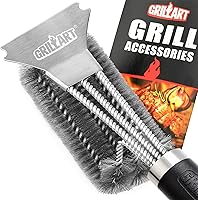
The GRILLART Grill Brush Outdoor BBQ Scraper has 3 rows of stainless-steel bristles, a stainless-steel handle, and an 18 in length. Its 360-degree brush design reaches grate corners and edges, while the scraper helps loosen stubborn residue before brushing.
The longer handle can keep your hands farther from a warm grate, but it doesn't make brushing over flames safe. The brush is described for charcoal, smoker, porcelain, infrared, Weber, and Foreman grill grates, so match your pressure to the surface.
Inspect the tightly twisted bristles before every use. A design intended to reduce wire shedding still needs regular checks, especially after cleaning baked-on grease.
Should you choose a bristle-free grill cleaner?
The Weetiee Grill Brush & Bristle Free Outdoor is a bristle-free option with a wide scraper and a stainless-steel helix design. It is made for metal and porcelain surfaces, and its 18 in length provides reach across outdoor grates.
A bristle-free tool removes the wire-shedding concern, but it may require repeated passes on baked-on residue. The flexible helix is designed to reach the sides of grate bars, while the wider scraper covers more area per stroke.
Use steady pressure without bending the handle. Check the helix and scraper for damage after cleaning, and replace the tool if the cleaning surface becomes cracked or unable to stay in contact with the grate.
What should you do after brushing?
Remove loosened debris, wipe the grate, and let the surface dry before storing the brush. Shake or rinse the brush only in a way that suits its material, then keep it where the bristles will not bend.
Don't leave grease packed into the brush head. Buildup can hide loose wires and make the next inspection harder.
If the brush has a scraper, keep its edge clear of hardened food. A damaged scraper can snag the grate and make you apply more pressure than needed.
For indoor appliances, use the gentler process in our guide to the best panini grill brush. If you want to cook on a removable grate or rack, compare the best grill pan with rack for a different cleanup setup.
What is the safest way to use a wire grill brush?
Inspect before brushing, warm without active flames, use short strokes, and check every grate surface afterward. Replace a brush as soon as its wires loosen, bend badly, or begin to shed.
Choose the GRILLART brush when you want a long stainless-steel wire brush with a scraper for outdoor grates. Choose the OXO brush for indoor appliances and delicate surfaces, or choose the Weetiee cleaner when avoiding wire bristles matters most.
If you prefer not to use wire at all, start with how to clean a grill without a wire brush. The right tool is the one that removes residue while letting you inspect the cooking surface completely.
Frequently asked questions
Is it safe to use a wire brush on a grill?
A wire brush can clean grill grates effectively, but loose bristles can become a food safety hazard. Inspect the brush before and after use, keep pressure controlled, and check the grate carefully before cooking.
Replace the brush when wires are bent, loose, or missing.
Should a grill be hot before using a wire brush?
A warm grate can soften grease and stuck food, but turn the grill off before brushing. Avoid brushing over active flames or glowing coals.
Let the surface cool enough to handle safely, then remove residue and inspect the grate before adding food.
How do I check for loose wire bristles?
Look closely across the grate, corners, and gaps after brushing. Wipe the surface with a clean, light-colored cloth or paper towel and check for metal strands.
If you find a loose bristle, remove it and inspect the brush and grate again before cooking.
What can I use instead of a wire grill brush?
Use a bristle-free grill scraper or another tool suited to your grate material. A bristle-free option can reduce the risk of loose wire pieces, though it may need more pressure or repeated passes to remove baked-on residue.
Always follow the tool's surface guidance.