How to Choose a Built-in Indoor Grill
The right indoor built in grill fits your kitchen plan, ventilation, power circuit and available clearance. Check those installation details before comparing cooking surfaces, temperature controls and cleanup.
On this page (9 sections)
- What type of indoor built-in grill do you need?
- How do ventilation and smoke control affect an indoor built in grill?
- How much power does an indoor built in grill need?
- How much clearance does an indoor built-in grill need?
- Should you choose charcoal or electric for indoor cooking?
- What cooking controls should an indoor built-in grill have?
- How should you plan cleanup and maintenance?
- Which indoor built-in grill setup fits your kitchen?
- FAQ
The right indoor built in grill depends on more than the cooking surface. First confirm whether you need a permanently installed appliance or a countertop grill, then check ventilation, electrical power, heat clearance and cleaning access.
A built-in indoor grill can become part of a kitchen island or counter run, while a countertop model stays portable. Those setups have different space, safety and installation needs.
What type of indoor built-in grill do you need?
Choose a true built-in grill for fixed kitchen installation and a countertop electric grill for flexible indoor cooking. The installation type affects ventilation, power access, counter support and how easily you can replace or move the appliance later.
A built-in unit usually needs a designed opening, approved clearances and a ventilation plan. Follow the installation instructions for the exact model, since nearby cabinets and walls can change the required spacing.
A countertop electric grill needs a stable, heat-safe surface and an accessible outlet. It may suit renters, smaller kitchens or cooks who want to store the grill after use.
Do not treat the word “indoor” as proof that a grill can be installed inside cabinetry. Indoor cooking still requires heat management, grease control and enough open space around hot surfaces.
For a basic explanation of electric heating and cooking surfaces, read How Do Indoor Electric Grills Work?.
How do ventilation and smoke control affect an indoor built in grill?
Ventilation is a core buying decision for an indoor built-in grill, especially if you plan to sear meat or cook foods that release grease and smoke. A hood, exhaust fan or other approved ventilation method can affect where the grill can go.
“Smokeless” does not mean smoke-free in every cooking situation. Fat, marinades and high heat can still create vapor, odor and grease, so check what the grill's ventilation system is designed to handle.
Your kitchen layout matters as much as the grill. A unit beneath low cabinets may need more planning than a countertop grill placed in an open area.
Read What Does Smokeless Mean on an Indoor Grill? before treating a smoke-control label as a complete installation plan.
Grease control also affects cleanup. Look for a removable drip tray, a cooking surface that can be cleaned safely and enough access to remove parts without scraping against nearby cabinets.
How much power does an indoor built in grill need?
Check the grill's voltage, wattage and outlet location before installation. A high-heat grill can need a dedicated circuit or a circuit with enough remaining capacity, depending on the appliance and the rest of your kitchen.
The Hamilton Beach Electric Indoor Searing Grill uses 1,200 watts and 110 volts of alternating current. Its adjustable temperature control reaches 450°F, and it has power and preheat lights.
Its 118 sq. in. surface is described as serving 6, so it suits a larger cooking session than a compact personal grill. The PFAS-free removable nonstick grate, removable hood and drip tray support a cleanup-focused setup.
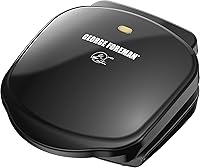
The George Foreman 4-Serving Indoor Grill uses 1,800 watts and 110 volts. Its 60 sq. in. grill is designed for 4 servings, with removable dishwasher-safe grill plates.
The George Foreman model is also an electric grill and panini press. Its removable plates can make cleanup easier when the grill is used often, but its smaller cooking surface may require batches for larger meals.
Before choosing either countertop model for a fixed location, confirm that the outlet remains reachable and that the cord does not pass across a hot or wet area.
How much clearance does an indoor built-in grill need?
Leave enough clearance for heat, ventilation, cooking access and cleaning. The exact distance comes from the grill's installation instructions, not from a general measurement that works for every kitchen.
Measure the width, depth and height of the intended space. Then account for the grill's controls, lid movement, drip tray removal, power cord and any ventilation opening.
Cabinet material and nearby surfaces also matter. A heat-safe counter does not automatically make the surrounding wall, backsplash or cabinet underside suitable for high-heat cooking.
For a countertop grill, the Hamilton Beach model measures 12.4 in deep, 16.73 in wide and 6.81 in high. The George Foreman model measures 12 in deep, 12 in wide and 6.5 in high.
Those dimensions describe the appliances, not the full operating area. Leave room to open the hood, place food safely and remove hot parts without reaching over another burner or appliance.
Should you choose charcoal or electric for indoor cooking?
Choose electric for indoor cooking unless the appliance is specifically designed and approved for your intended indoor installation. Charcoal produces combustion gases and should not be used inside a home or enclosed kitchen space.
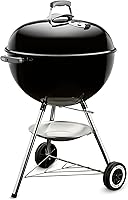
The Weber® Original Kettle Charcoal Grill is an outdoor charcoal grill, not an indoor built-in appliance. Its 22-in cooking surface offers room for up to 13 burgers made with a Weber burger press, and its porcelain-enameled lid and bowl retain heat.
Its One-Touch cleaning system uses an aluminized steel ash catcher, while the rust-resistant aluminum damper controls airflow. Those features may help explain the difference between outdoor charcoal equipment and indoor electric grills, but they do not make it suitable for kitchen installation.
The Weber grill has a 25 x 25 x 39.5 in footprint and is intended for outdoor use. Keep it outside and compare it only as an alternative cooking style, not as an indoor built-in replacement.
For a broader comparison of flexible electric options, see Best Indoor Outdoor Electric Grills.
What cooking controls should an indoor built-in grill have?
Look for controls that match how you cook. Adjustable temperature control helps when you need both high-heat searing and lower-temperature grilling, while fixed contact heat may suit quick sandwiches or small meals.
The Hamilton Beach grill has 6 settings and a temperature dial that reaches 450°F. Its preheat light gives you a visible signal during warm-up, while the hood helps cover the cooking surface.
The George Foreman grill focuses on a compact contact-grill format. For simpler controls and beginner-friendly choices, see indoor grills for beginners.
Its nonstick coating, removable plates and panini-press design suit quick meals where simple loading and cleanup matter more than a large open surface.
A built-in grill may also have a separate temperature display or a built-in thermometer. Those are not the same as the control setting.
The control tells the appliance what heat level to target, while a thermometer measures temperature at its own location.
See How Does a Built-in Grill Thermometer Differ from the Temperature Control? for that distinction.
How should you plan cleanup and maintenance?
Plan cleanup before installation by checking how the grate, plate, hood and drip tray come out. A grill that blocks access to removable parts can become difficult to maintain, even when its cooking features suit your menu.
The Hamilton Beach model has a removable nonstick grate, removable hood and removable drip tray. These parts are dishwasher safe, according to the product information.
The George Foreman model has removable grill plates that are dishwasher safe. Its advanced George Tough nonstick coating is described as 3x more durable, and the cooking surface is designed to reduce the need for butter and oil.
Let hot parts cool according to the product instructions before handling them. Wipe grease from accessible surfaces, keep electrical connections dry and avoid blocking vents during storage or use.
For installation and use guidance, read How to Use a Built-In Indoor Grill Safely.
Which indoor built-in grill setup fits your kitchen?
Choose a fixed built-in installation when the kitchen is being designed around the appliance and you can meet its ventilation, power and clearance requirements. Choose a countertop electric grill when you want simpler setup, easier replacement or the ability to store the appliance.
The Hamilton Beach Electric Indoor Searing Grill suits cooks who want a larger 118 sq. in. surface, a hood, adjustable heat up to 450°F and removable dishwasher-safe parts.
The George Foreman 4-Serving Indoor Grill suits smaller cooking areas and quick meals. Its 60 sq. in. surface, removable plates and panini-press format keep the setup compact.
The Weber® Original Kettle Charcoal Grill belongs outdoors. Its charcoal fuel, ash catcher, dampers and 22-in cooking surface make it a separate outdoor option, not an indoor built-in choice.
If you are deciding between built-in and portable electric equipment, start with the installation space, outlet and ventilation plan. Then compare cooking size, heat controls and cleanup access.
For another product-specific comparison, see the Chefman electric indoor grill review.
FAQ
Can you install any indoor electric grill as a built-in appliance?
No. An indoor electric grill is not automatically approved for built-in installation.
Check the exact installation instructions, required clearances, ventilation needs, power requirements and access for cleaning before placing any appliance inside a counter or cabinet opening.
What is the best power level for an indoor built in grill?
The best power level depends on the cooking surface and your circuit. The Hamilton Beach grill uses 1,200 watts, while the George Foreman grill uses 1,800 watts.
Confirm the outlet and circuit can support the appliance with other kitchen equipment running.
Does an indoor built in grill need a vent hood?
Many indoor grilling setups need ventilation because high heat can produce smoke, grease and cooking odors. A “smokeless” label does not remove the need to check the appliance instructions and your kitchen's ventilation plan.
Can a charcoal grill be used as an indoor built-in grill?
No. The Weber Original Kettle Charcoal Grill is designed for outdoor use.
Charcoal combustion creates gases and heat that are not suitable for indoor kitchen installation, even when the grill fits a counter or island opening.
Are grill temperature controls and thermometers the same?
No. A temperature control sets or adjusts the heat level, while a thermometer measures temperature at a particular point.
The readings can differ because food, the grate, the lid and the surrounding air may not be at the same temperature.