How to Use Built In Indoor Grills Safely
Use a built-in indoor grill only in an approved installation with proper ventilation, clearances, and electrical protection. Keep flammable items away, control grease, and follow the grill and installation manuals.
On this page (9 sections)
- What makes a built-in indoor grill installation safe?
- How should ventilation work around an indoor grill?
- What clearances should you check before cooking?
- How do you use the grill without creating electrical hazards?
- How can you reduce smoke and grease safely?
- Which countertop electric grill is easier to manage?
- How should you control heat during cooking?
- What should you do after cooking?
- What is the safest choice for indoor and outdoor use?
Use these built in indoor grills safety precautions every time: confirm the installation is approved, keep ventilation clear, maintain the required clearances, control grease, and stay with the grill while it heats and cooks.
A built-in unit is part of a countertop or cabinet plan, so safe operation starts before the first meal. Read the installation and operating instructions, then check local electrical and building requirements.
This approach suits a home cook who wants the grill to work as part of the kitchen, not as a loose appliance placed wherever there is counter space. It also suits a reader planning a remodel, because early checks can reveal a cabinet depth, hood size, or wiring issue while changes are still easy to make.
The specs in the manual matter in daily use. Clearance figures tell you how close cabinets, walls, and backsplashes may sit to a hot surface.
Electrical details tell you what circuit and outlet arrangement the grill expects.
Set-up care begins with a level fit and a clean, open space around the unit. Keep paper goods, towels, and packaging out of the heat zone, and make sure controls and grease parts remain easy to reach.
Care also means checking filters, trays, and nearby surfaces before buildup becomes a problem. A short routine before each cook can make the next steps safer and simpler.
What makes a built-in indoor grill installation safe?
A safe installation matches the grill, countertop opening, ventilation system, electrical supply, and required clearances. The visible grill surface is only one part of the setup.
Before using a built-in indoor grill, confirm that:
- The unit is approved for indoor use.
- The countertop and cabinet materials suit the installation.
- The electrical circuit matches the grill instructions.
- The ventilation system is installed and working.
- Required space around the unit is open.
- Grease collection and cleaning access are available.
- The grill sits level and does not move during use.
For planning help, compare How to Choose a Built-in Indoor Grill before cutting a countertop. The right opening size does not by itself prove that the ventilation, wiring, and surrounding clearances are safe.
How should ventilation work around an indoor grill?
Ventilation should remove cooking heat, smoke, grease vapor, and odors from the cooking area. Turn it on before heating the grill and leave it running long enough to clear the air after cooking.
Keep the hood, exhaust path, and filters free from grease buildup. Don't block vents with containers, towels, cutting boards, or decorative items.
A grill described as smokeless may reduce visible smoke during some cooking, but it still produces heat and cooking vapor. Our guide to what smokeless means on an indoor grill explains why that label should not replace ventilation.
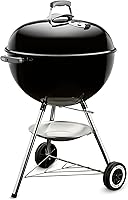
Never use a charcoal grill or a fuel-burning grill indoors. The Weber® Original Kettle Charcoal Grill is a 22-inch charcoal grill specified for outdoor use, with a porcelain-enameled lid and bowl, a steel cooking grate, dampers, and an aluminized steel ash catcher.
Keep charcoal, lighter fluid, and outdoor grilling equipment outside the home. A garage, enclosed porch, or shed is not a safe substitute for open outdoor space.
What clearances should you check before cooking?
Use the exact clearances in the installation manual and local code. Check the space above the grill, behind it, beside it, and below the countertop opening.
Keep curtains, paper towels, wooden utensils, packaging, and other flammable items away from the heat zone. Do not store containers in a cabinet directly above the grill unless the installation instructions allow it.
Leave access to controls, the grease area, and any removable parts. A tight cabinet layout can make cleaning harder and may trap heat around the appliance.
Measure the surrounding space before installation, then check it again after adding a hood, backsplash, shelves, or countertop appliances. Small changes can reduce the open space around a hot surface.
How do you use the grill without creating electrical hazards?
Use the power connection specified for the grill, keep cords and plugs away from hot surfaces, and keep water away from electrical parts. Don't use an extension cord unless the instructions specifically allow it.
For portable electric grilling, place the appliance on a stable, heat-safe surface with open space around it. The Hamilton Beach Electric Indoor Searing Grill has a 118 sq. in. surface, adjustable temperature control up to 450°F, 6 settings, a 1200-watt rating, and a 110-volt AC rating.
Its removable hood, plate, and drip tray are dishwasher safe. Let each part cool before removing it, and keep the power connection dry during cleaning.
The Hamilton Beach grill suits readers who want a hooded electric grill with adjustable heat. Its 16.73 in W x 12.4 in D x 6.81 in H dimensions still require a clear countertop area for safe portable use.
For a smaller appliance setup, follow the operating and placement advice in How to Use a Small Electric Grill Indoors. Small size does not remove the need for ventilation or clearance.
How can you reduce smoke and grease safely?
Reduce smoke by trimming excess fat, avoiding overloaded cooking surfaces, using the correct heat, and emptying the grease area before it becomes full. Grease that reaches a hot element or surface can flare.
Keep the drip tray and grease channel clean according to the instructions. Don't pour water onto hot grease, and don't move a hot grill while food or grease is inside.
Use long-handled tools where appropriate, keep sleeves and towels away from the cooking surface, and open the hood carefully. Hot steam and trapped heat can rise toward your face and hands.
Never cover ventilation openings with foil unless the instructions specifically permit it. A covering can change airflow and allow grease or heat to collect where it should not.
Which countertop electric grill is easier to manage?
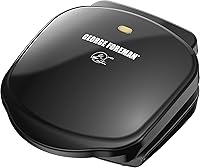
A grill with removable plates can simplify cleaning, but you still need to control heat, grease, and contact with hot surfaces. The George Foreman 4-Serving Indoor Grill has a 60 sq. in. cooking area, removable dishwasher-safe plates, a ceramic material listing, a 110-volt rating, and an 1800-watt rating.
The George Foreman grill measures 12 in D x 12 in W x 6.5 in H. Its product information also identifies it as an electric grill and panini press with a nonstick coating.
Choose this type when removable plates and a compact footprint fit your routine. Allow the plates and grill body to cool before removing parts, and follow the cleaning instructions for the appliance.
Don't assume a removable plate makes every part washable. Keep the electrical base out of water and clean it only as instructed.
How should you control heat during cooking?
Start with the recommended setting, preheat only as instructed, and adjust heat when food begins to brown too quickly or grease starts smoking. High heat is useful for some searing, but it also increases the risk of smoke and splatter.
Use a thermometer when the recipe calls for a target internal temperature. A built-in thermometer and a temperature control serve different jobs, as explained in How Does a Built-in Grill Thermometer Differ from the Temperature Control?.
Keep the lid or hood position aligned with the instructions. Don't place hands over a hot surface to check food, and don't touch the grate, hood, handles, or surrounding metal until they have cooled.
If the grill produces unusual smoke, a burning smell, sparks, or repeated overheating, turn it off and disconnect power when safe. Stop using it until the cause is understood.
What should you do after cooking?
Turn off the heat, switch off ventilation only after smoke and vapor clear, and let the grill cool before cleaning. Remove grease while it is manageable, but never handle hot trays or plates.
Wipe nearby surfaces so grease does not build up around the installation. Check that no food or packaging has fallen into a gap near the grill.
For removable parts, use only the cleaning method allowed by the instructions. Dry parts fully before reinstalling them, and make sure trays, plates, and covers sit correctly.
Do not restart the grill if a plate, drip tray, control, cord, or housing is damaged. Arrange service or replacement according to the manufacturer's instructions.
What is the safest choice for indoor and outdoor use?
Choose a purpose-built electric grill for indoor cooking and reserve charcoal equipment for outdoor use. The best indoor outdoor electric grill options still need the correct setting, ventilation, power connection, and clearances for each location.
For built-in installations, pick the grill only after confirming the cutout, cabinet materials, exhaust plan, electrical supply, and service access. For portable use, prioritize stable placement, open space, removable parts, and easy grease control.
Indoor use and outdoor use ask for different habits. An indoor electric grill needs steady airflow and close attention to grease, because heat and vapor stay near cabinets and walls.
An outdoor charcoal grill needs open air and distance from buildings, since charcoal produces combustion gases that do not belong inside.
The honest trade-off is planning effort. A built-in model can fit the kitchen well, but the opening, exhaust, wiring, and clearances must agree from the start.
A portable model is simpler to move, yet it still needs a heat-safe surface and room around it.
The core rule for built in indoor grills safety precautions is simple: approved installation first, ventilation and clearances next, then careful heat and grease control during every cook.
Frequently asked questions
Can you use a charcoal grill indoors?
No. A charcoal grill produces combustion gases and needs outdoor use.
The Weber Original Kettle Charcoal Grill is specified for outdoor use, so it doesn't belong in a kitchen, enclosed porch, garage, or other indoor space.
Use only an electric grill designed and approved for indoor operation.
How much clearance does a built-in indoor grill need?
Use the exact clearances in the grill's installation manual and local code. Keep the required space above, behind, and beside the unit open, and don't guess from the countertop cutout alone.
Cabinets, walls, curtains, and other heat-sensitive items must stay outside the approved clearance zone.
Do indoor grills need ventilation?
Yes, ventilation helps remove heat, smoke, grease vapor, and cooking odors. Use the ventilation system required for your installation, keep filters clean, and confirm that the grill and hood work together as approved.
A label such as smokeless doesn't remove the need for safe airflow.
Can you leave an indoor grill unattended?
No. Stay nearby while the grill is heating and cooking, especially during high-heat searing.
Turn the controls off, unplug a portable electric grill when appropriate, and let hot surfaces cool before cleaning or leaving the area.