How to Choose a Grill
Choose a grill by where you cook, how much food you make, and which heat controls you need. Compare electric, gas, contact, open-surface and hooded designs before you compare extra features.
On this page (15 sections)
- How do you choose a grill type?
- How should cooking location affect your choice?
- How much cooking surface do you need?
- Which heat controls should you look for?
- Which grill suits open-surface cooking?
- Which grill suits one or two servings?
- Which grill suits high-heat indoor searing?
- How does a grill differ from an electric griddle?
- Which cleanup features matter most?
- How should you compare grill materials and surfaces?
- Should you choose a grill with a hood?
- How do you choose a grill for air-fryer meals?
- What should you measure before buying a grill?
- How should you choose between these three grills?
- What is the final rule for how to choose a grill?
The best way to choose a grill is to match the grill type, cooking area and heat control to your normal meals. Start with where you will cook, then decide how many servings you need and how much cleanup you will accept.
A small electric contact grill can suit quick meals for one or two people. A wide griddle gives you an open surface for pancakes, eggs or several foods at once, while a hooded indoor grill is better for searing foods under controlled heat.
How do you choose a grill type?
Choose a grill type by the food you cook most often and the space available. Contact grills press food between heated plates, open griddles provide a broad flat surface, and hooded grills hold heat around the food.
The main types have different strengths:
| Grill type | Best fit | Main trade-off |
|---|---|---|
| Contact grill | Quick meals, sandwiches and 1–2 servings | Smaller cooking area and less control over food placement |
| Open electric griddle | Pancakes, eggs, French toast and mixed meals | Needs more counter and storage space |
| Hooded indoor grill | Steaks, burgers, pork chops and fish | Larger footprint and more parts to clean |
| Gas grill | Outdoor cooking and open-flame control | Needs fuel, outdoor space and suitable ventilation |
| Infrared grill | Buyers focused on high radiant heat | Compare surface design, controls and placement needs carefully |
Your cooking location narrows the choice quickly. Indoor electric models are designed for a countertop and plug into an outlet.
Gas grills may be more suitable outdoors, depending on the model and local safety requirements.
If you are comparing an indoor grill with a separate pan, read How Does an Indoor Grill Differ from a Stovetop Grill Pan?. A grill gives you an appliance built around grilling, while a pan works with the stovetop you already own.
How should cooking location affect your choice?
Choose an electric grill for simple indoor cooking when you have a suitable outlet and enough counter space. Choose a gas grill when outdoor placement, fuel access and open-flame cooking are central to your routine.
Electric grills are convenient for kitchens because they do not require propane or charcoal storage. They also make setup more direct: place the grill on a stable surface, connect the control or power cord as instructed, and preheat before cooking.
Gas grills can offer a different cooking process and may suit outdoor meals. They need fuel planning, safe placement and careful attention to the manufacturer's instructions.
For a fuller comparison, see Electric vs Gas Grill: Which Should You Choose?. The better choice depends less on a general ranking and more on whether you cook indoors or outdoors most of the time.
Which grill is easiest to set up indoors?
A plug-in electric grill is usually the simplest indoor option because it avoids fuel handling. You still need a stable counter, a clear area around the appliance and a way to manage heat, steam and grease safely.
Check the electrical information before buying. The examples in this guide use 120 volts, 110 volts of alternating current or 760 watts, depending on the model, so do not assume every grill has the same power requirement.
Do not place a grill where its hot surfaces, lid or controls can contact cabinets or other items. Keep the cord away from the heated cooking area and follow the appliance instructions for ventilation and placement.
How much cooking surface do you need?
Choose cooking area by your largest regular meal, then consider how much counter space and storage room you have. A larger surface can reduce batches, but it also takes more room to store and clean.
Use these rough categories as a starting point:
- One or two servings: a compact contact grill can be enough.
- Several portions on an open surface: choose a wider griddle.
- Family-size grilling with a hood: compare the cooking surface and serving guidance.
- Mixed meals: choose a surface that lets you keep foods separate.
The George Foreman GR10B has a 7.36 x 5.67 in cooking surface and is designed for 1–2 servings. The Hamilton Beach model has a 118 sq. in. surface and is described for 6 servings.
These are different designs for different meal sizes.
What does grill capacity mean in daily use?
Capacity tells you how much food can fit at one time, but it does not guarantee that every food will cook well when crowded. Thick pieces, uneven shapes and foods that release moisture may need more room between them.
A compact grill may be efficient for one person because it heats a small area and needs less storage space. A broad surface may be better for a household meal because you can cook more food without repeating the process.
Count the foods you make together. If breakfast often includes pancakes, eggs and toast, an open griddle may suit you better than a small contact grill.
If you mostly cook sandwiches or a pair of portions, the contact format may be easier.
Which heat controls should you look for?
Choose a grill with the heat control you will actually use. Adjustable temperature helps when you cook different foods, while a simpler design can be fine for repeatable meals.
A useful heat-control setup may include:
- An adjustable temperature dial.
- A preheat indicator.
- A power light.
- Automatic temperature maintenance.
- A clear high-heat setting for searing.
The Hamilton Beach Electric Indoor Searing Grill has an adjustable temperature dial, power and preheat lights, and a high-heat setting to 450°F. It can also be used at lower heat when searing is not the goal.
The Presto griddle has a Control Master heat control that maintains cooking temperatures automatically. Its 6 settings give you a way to adjust the cooking surface for different meals.
The George Foreman GR10B is a simpler 760-watt contact grill designed around compact portions. Its appeal is the format and size rather than a list of advanced cooking modes.
If high radiant heat is your main reason for shopping, compare How to Choose an Infrared Indoor Grill. Infrared wording alone does not tell you whether the grill's size, controls and cleanup fit your kitchen.
Which grill suits open-surface cooking?
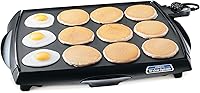
Choose an open griddle when you want space to place different foods separately. This design is useful for pancakes, French toast, eggs, vegetables and other foods that are easier to turn or move on a flat surface.
Its ceramic nonstick cooking surface is PFAS free. The surface can stay level for pancakes or tilt to drain meats, and the cool-touch base surrounds the front and both sides.
A backstop ledge can help with food handling on the broad surface. The slide-out drip tray gives grease a place to collect during cooking.
The griddle is 23.94 in wide, 18.5 in high and 5.12 in deep. That footprint needs more counter and storage planning than a compact contact grill.
For care, remove the heat control before immersing the griddle. The slide-out drip tray and removable heat control affect how you set up cleanup after each meal.
Which grill suits one or two servings?
Choose a compact contact grill when you usually cook for one or two people and want a small cooking surface. This format can also suit dorm rooms, small apartments and kitchens where storage space is limited.
The grill also works as a panini press. Its cooking system uses grill plates and a lid, so food cooks between the heated surfaces rather than on one open plane.
The sloped grilling surface is designed to help remove fat during cooking. A drip tray collects excess fat and is dishwasher safe, while the nonstick coating is intended to reduce the need for butter and oil.
Its compact footprint is 9.40 in long, 5.78 in wide and 10.27 in high. Weighing 2.8 lb, it is easier to move than the larger examples here, but the cooking area is limited to smaller portions.
Read How Do Indoor Electric Grills Work? if you want to understand how heating plates, contact surfaces and temperature control shape the cooking process.
Which grill suits high-heat indoor searing?
Choose a hooded indoor grill when you want adjustable heat and a larger surface for several portions. A lid can help keep heat around the food, while a removable grate and drip tray can make cleanup easier.
The grill has an adjustable temperature dial for lower heat and a high-heat setting for searing. Power and preheat lights show the appliance's operating status.
Its hood, plate and drip tray are removable and dishwasher safe. The removable nonstick grate is PFAS free, and the extra-large drip tray collects grease during cooking.
The grill measures 12.4 in deep, 16.73 in wide and 6.81 in high. It weighs 8.1 lb, so measure both the counter and the storage shelf before choosing it.
If you need a grill for a commercial kitchen, compare the considerations in Best Indoor Grills for Restaurants. Restaurant use may place more emphasis on workflow, cleaning access and cooking volume than a home kitchen does.
How does a grill differ from an electric griddle?
A grill usually emphasizes raised contact areas, a grate or a hooded cooking chamber, while an electric griddle emphasizes a broad flat surface. Choose a grill for grilled marks, contact cooking or hooded heat, and choose a griddle for flexible flat-surface meals.
The distinction is not absolute. Some contact grills can press sandwiches and cook meat, while some griddles can handle a wide range of breakfast and dinner foods.
Think about food shape and movement:
- A flat griddle makes it easier to spread, flip and separate food.
- A contact grill can cook both sides at once.
- A hooded grill can keep heat around thicker foods.
- A ridged surface may create grill marks but can be harder to wipe clean.
- A removable grate or tray can reduce cleanup work.
Read How Is an Electric Grill Different from an Electric Griddle? before choosing based only on the word “grill.” The cooking surface often matters more than the label.
Which cleanup features matter most?
Choose a grill with removable cooking parts, a drip tray or a surface that matches your cleaning routine. A grill that cooks well but is difficult to clean may be a poor fit for frequent use.
Look for these practical details:
- Removable plates or grates.
- A drip tray that can be emptied easily.
- Dishwasher-safe parts, when stated.
- A nonstick surface that can be wiped without abrasive tools.
- A design that lets grease move away from the food.
The Presto griddle has a slide-out drip tray and can be fully immersed after the heat control is removed. The George Foreman GR10B has a dishwasher-safe drip tray.
The Hamilton Beach model has a removable hood, plate and drip tray that are dishwasher safe.
Do not submerge any appliance until the removable electrical control or power component has been taken out as directed. Let hot parts cool before handling them, and use utensils that suit the cooking surface.
How should you compare grill materials and surfaces?
Compare the cooking surface first, then consider the surrounding material and care instructions. Ceramic, nonstick and PFAS-free descriptions can affect food release and cleanup, but they do not replace correct heat and utensil use.
The Presto model has a ceramic nonstick cooking surface and a black cool-touch base. The George Foreman model has nonstick grill plates with a plastic frame and handle.
The Hamilton Beach grill has a removable PFAS-free nonstick grate and a metal construction.
These materials describe different parts of the appliances. They do not mean the grills cook in the same way or need identical care.
Avoid abrasive cleaning tools unless the instructions allow them. Remove food residue after the surface cools, and keep drip areas clear so grease does not build up around the appliance.
Should you choose a grill with a hood?
Choose a hooded grill when you want heat held around the food and a covered cooking process. A hood can also help keep splatter more contained, but it adds another part to clean and another measurement to check.
The Hamilton Beach model uses an indoor grill hood and a removable plate. Its hood closes over the cooking surface, and the grill is designed for searing at up to 450°F or cooking at lower adjustable heat.
A hood is less important for pancakes, French toast or eggs on an open griddle. It may be more useful for foods that benefit from heat surrounding the top and sides.
Check how the lid opens and where it sits when raised. Cabinets, shelves and nearby appliances can limit the usable space even when the closed grill fits the counter.
How do you choose a grill for air-fryer meals?
Choose an air-fryer grill when you want a countertop appliance that combines grilling with hot-air cooking. Confirm which functions the model supports, how food sits in the cooking chamber and how the parts are cleaned.
Air-fryer grills vary widely. Some use a basket, some use a rack, and some combine several cooking modes in one appliance.
Read How to Use an Air Fryer Grill before treating an air-fryer grill as a direct replacement for a contact grill or open griddle. The cooking method, airflow and food placement can change the result.
For a dedicated grill, compare the surface and heat controls first. For a multi-use appliance, decide whether the extra cooking mode will save counter space or create more parts to store.
What should you measure before buying a grill?
Measure counter depth, width, height, storage space and outlet location before choosing a model. Include room for handles, lids, controls, ventilation and safe movement around the appliance.
Use this checklist:
- Measure the open counter area, not just the empty shelf.
- Compare the grill's width and depth with nearby walls and appliances.
- Check the height with the lid open, if it has one.
- Confirm that the cord can reach a suitable outlet without crossing hot areas.
- Measure the storage shelf or cabinet where the cooled grill will live.
- Leave room to carry the grill safely to the sink or cleaning area.
- Check whether the drip tray or plate can be removed without hitting another item.
The Presto model's 23.94 in width makes counter planning especially important. The George Foreman model is much smaller, while the Hamilton Beach model sits between them in width but adds a hood and removable parts.
How should you choose between these three grills?
Choose the Presto for broad, open-surface meals. Choose the George Foreman for compact 1–2 serving contact cooking.
Choose the Hamilton Beach for a larger indoor surface with adjustable heat and a high searing setting.
The Presto is the strongest fit when your meals include pancakes, French toast or several foods at once. Its tilt function and drip tray also make it useful when you want grease to move away from meats.
The George Foreman is the clearest fit for small kitchens, dorm rooms, couples or one-person meals. Its cooking surface is limited, but the compact design and dishwasher-safe drip tray support quick, small-batch cooking.
The Hamilton Beach suits buyers who want a hooded indoor grill with a 118 sq. in. surface, removable dishwasher-safe parts and adjustable temperatures up to 450°F. Its larger size needs more storage planning.
What is the final rule for how to choose a grill?
Choose a grill by cooking location first, serving size second and heat and cleanup features third. If you cook open-surface meals, choose the Presto.
If you cook one or two portions, choose the George Foreman. If you want hooded indoor searing with adjustable heat, choose the Hamilton Beach.
Measure the space before ordering, check the electrical requirements and make sure the cleanup parts fit your routine. The right grill is the one whose cooking surface, controls and storage needs match the meals you will make most often.
Frequently asked questions
How do I choose a grill for indoor cooking?
Choose an indoor electric grill with a size that fits your counter and a heat control that matches your food. Contact grills suit quick portions, griddles suit open-surface cooking, and hooded searing grills suit foods that benefit from trapped heat.
Check ventilation, cleanup and storage before buying.
Which grill is best for a small kitchen?
A compact electric contact grill is usually the easiest fit for a small kitchen because it uses little counter space and cooks one or two servings. Measure the storage area as well as the counter, then compare the cooking surface, cord placement and cleanup parts.
Should I choose an electric or gas grill?
Choose electric when you want simple indoor setup, steady plug-in power and no fuel storage. Choose gas when outdoor cooking, portable fuel and open-flame control matter more.
Your cooking location and local rules should decide before heat output or extra features.
What grill size do I need?
Choose a cooking surface based on the largest meal you make regularly, not an occasional large meal. A 1–2 serving grill suits one or two people, while a wider griddle or 118 sq. in. grill gives more room for family meals.
Also measure the storage footprint.
What grill features matter most?
The most useful grill features are adjustable temperature control, a cooking surface that fits your meals, removable parts for cleaning, a drip tray when grease is expected, and a design that suits your cooking space. Extra modes matter only when you will use them.