How to Choose an Infrared Indoor Grill
Choose an infrared indoor grill by matching its cooking surface, smoke control and footprint to your meals. Then check heat settings, grease handling, cleanup and the space around the grill.
On this page (8 sections)
- What should you look for in an infrared indoor grill?
- How does the cooking surface change your choice?
- How important is smoke management?
- What temperature control does an indoor infrared grill need?
- How much counter space does an infrared indoor grill need?
- How should you compare infrared indoor grill cleanup?
- Is an infrared indoor grill safe to use indoors?
- Which infrared indoor grill fits your cooking style?
The best infrared indoor grill for your kitchen depends on the cooking surface, smoke management and countertop footprint. Those three choices shape almost every other decision you will make.
Pick a compact contact grill for 1 or 2 servings, a wider open surface for batches, or a hooded searing grill when you want stronger heat control. Each style suits a different kitchen and a different routine.
A small contact grill suits a single person, a couple, or a dorm room. It heats quickly and stores away with little effort.
The limit is capacity, since only one or two portions fit at once.
A wider open surface suits breakfasts and family meals. You can spread out pancakes, French toast, eggs, and vegetables without crowding them.
That flexibility makes it easier to cook several foods together.
A hooded searing grill suits cooks who focus on meat and grill marks. The hood creates a more enclosed space and helps with searing.
It also needs more height and counter width than a compact model.
Infrared heat can cook food quickly, but the word alone does not tell you how much food fits or how easy cleanup will be. It also says nothing about grease handling or storage.
Check the grate or plate, grease path, controls and storage needs before you compare models. Those practical details decide whether you will use the grill often or leave it in a cabinet.
Smoke is another point to check early. Grease and moisture can create smoke at high heat on any electric grill.
A clear grease path and clean surfaces help more than a label alone.
Consider who the grill suits in daily use. Someone cooking one sandwich may value speed and a small footprint.
Someone cooking breakfast for a family may value surface area and a level cooking area.
For a broader starting point, use our guide on how to choose a grill. It covers the wider grill types before you narrow the field to indoor models.
What should you look for in an infrared indoor grill?
Look for a cooking surface that fits your usual meals, a heat control that matches those meals and a grease system you can clean without moving the whole appliance. These details matter more than the infrared label by itself.
Start with your largest normal meal. If you cook one sandwich or a small portion at a time, a contact grill can save counter space.
If you cook several pieces of meat or a full breakfast, a wide griddle or grill plate may be easier.
Then check how the heat reaches the food. A closed contact grill heats from above and below.
An open grill exposes one surface to the food and may give you more control over placement. A hooded grill creates a more enclosed cooking area.
The right design depends on how you cook:
- Choose a contact design for sandwiches, burgers and small portions.
- Choose a wide surface for pancakes, French toast, vegetables and several pieces of food.
- Choose a hooded grill for searing and meals that benefit from a closed cooking space.
- Choose a removable plate or grate when cleaning is a major concern.
- Choose a smaller footprint when the grill must live in a cabinet between uses.
Our best electric grills for indoor cooking guide compares more electric options by use and design.
How does the cooking surface change your choice?
The cooking surface determines how much food fits, how you turn it and how grease moves away. A flat griddle, contact plate and removable grate each suit different routines.
A flat surface gives you room to spread food across one level. It works well for breakfast foods and meals that need separate zones, but it does not provide the same enclosed cooking space as a grill with a lid.
A contact surface presses food between two heated plates. This can shorten cooking time for small portions and sandwiches, but the fixed size limits how much you can cook at once.
A removable grate gives you a grill-style surface that can be taken out for cleaning. If the grate is nonstick, use utensils and cleaning methods that match the surface instructions.
Is a flat surface better for an infrared indoor grill?
A flat surface is better when you need flexibility across several foods at once. It gives you room for pancakes, French toast, eggs, vegetables or meat without arranging everything around grill ridges.
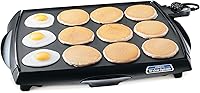
The Presto 07046 Tilt 'n Drain Big Griddle has a ceramic nonstick cooking surface and a large area that holds up to 12 slices of French toast. Its surface can stay level for pancakes or tilt to drain meat, so it suits cooks who want one broad appliance for several meal types.
The cool-touch base surrounds the front and both sides. A backstop ledge helps with food handling, while the slide-out drip tray gives grease a defined place to collect.
The griddle uses a Control Master heat control and has 6 settings. It is a 1,500-watt, 120-volt appliance with a 23.94 in W x 18.5 in H x 5.12 in D size.
Choose it if your priority is surface area and meal flexibility. Its wide footprint needs more counter or storage space than a small contact grill.
How important is smoke management?
Smoke management is important because high heat, grease and food moisture can create smoke even on an electric grill. A grill may reduce smoke through its grease path or enclosed design, but “smokeless” does not mean that every food will produce no smoke.
Look for a separate drip tray, a slope that moves grease away from heat, or a removable plate that makes residue easier to wash. Keep the cooking area clean because old grease can smoke during later cooking.
A lid or hood can also change how heat and vapor move around the food. It may help contain the cooking area, but it does not remove the need for ventilation and normal kitchen safety.
Read what smokeless means on an indoor grill before you rely on that label.
Does a sloped grill help with grease?
A sloped grill can help move rendered fat toward a drip tray instead of leaving it across the cooking surface. That makes the design useful for foods where grease removal is part of your cooking goal.
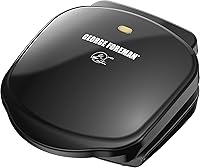
The George Foreman GR10B 2-Serving Mini Grill has a sloped grilling surface and a dishwasher-safe drip tray. Its 7.36 in x 5.67 in cooking surface is designed for 1 to 2 servings.
The grill has a nonstick coating and a 760-watt heating system. Its compact footprint is 9.40 in L x 5.78 in W x 10.27 in H, and it weighs 2.8 lb.
It works as a grill and panini press, with a lid and plastic frame and handle materials. Choose it when small portions and a small counter footprint matter more than batch cooking.
The trade-off is surface area. Two servings may fit, but a family meal or several larger pieces will need more than one cooking round.
What temperature control does an indoor infrared grill need?
Choose temperature control based on whether you only sear or also cook at lower heat. A single high setting can suit a narrow use, while an adjustable control gives you more options for different foods.
Searing needs strong heat, but not every meal should cook at the same temperature. Fish, vegetables, sandwiches and thinner foods may need a lower setting than a thick steak or burger.
Preheat indicators can make the start of cooking easier to judge. They show that the appliance has reached a heating point, but you still need to follow safe cooking practices for the food you prepare.
Is a hooded grill useful for indoor searing?
A hooded grill is useful when you want a high searing setting plus lower heat options in one appliance. The hood creates a more enclosed cooking area and can help produce grill marks when it closes over the food.
The Hamilton Beach Electric Indoor Searing Grill has an adjustable temperature control that reaches 450°F. Its 118 sq. in. cooking surface is described for up to 6 servings.
The grill has a PFAS-free removable nonstick grate, removable hood and removable drip tray. Those parts are dishwasher safe, which can reduce the work after cooking.
Power and preheat lights show the appliance status. It uses 1,200 watts and 110 volts of alternating current, with a 12.4 in D x 16.73 in W x 6.81 in H size.
Choose it if you want higher heat for searing and enough surface for several servings. Its 8.1 lb weight and wider body make it less convenient to store than a mini grill.
How much counter space does an infrared indoor grill need?
Measure the appliance footprint, storage location and clearance around the hot surface before choosing. A grill that fits the counter can still be awkward if its lid, controls or power cord collide with cabinets.
Start with width and depth. Place a tape measure on the counter where you plan to cook.
Note the open space from wall to edge and from one appliance to the next.
Then check height. A hooded model needs room above it, especially beneath an upper cabinet.
A contact grill that opens upward needs clearance for the lid in its open position.
Consider the cord as part of the footprint. The cord needs a safe route to an outlet without stretching across a sink, stove, or work area.
A short cord may limit where the grill can sit.
Leave room to place raw food, cooked food and utensils. You need a clean zone for raw items and a separate zone for finished food.
Crowding those zones together makes cooking harder and less safe.
Do not plan to move hot food across a crowded counter. A spatula needs space to lift food from the grill to a plate.
If plates must stack beside the grill, the setup is too tight.
Think about steam and splatter around the cooking area. Nearby paper towels, wooden utensils, and food packages should stay clear of the heat.
A little buffer space protects both your tools and your workspace.
Storage matters too. A wide griddle may need a dedicated shelf, while a compact contact grill can fit into a smaller cabinet.
Measure the shelf as well as the counter.
Check how you will carry the grill to and from storage. A heavier or wider model can be hard to lift with one hand.
If it needs two hands, clear a path before you move it.
Consider where the grill will cool after cooking. It needs a stable heat safe spot away from edges and walkways.
Plan that spot before you start cooking, not after you finish.
For small kitchens, a compact footprint can make daily use far easier. You can set it up on a small section of counter and put it away without moving other items.
That ease adds up over time.
For larger kitchens, a wide surface uses the space well. It can hold a full breakfast or several pieces of meat at once.
The trade off is a dedicated storage place and more counter space during use.
The easiest grill to use is often the one you can set up without clearing the whole kitchen. Measure first, plan the cord route, and leave working room around the hot surface.
How should you compare infrared indoor grill cleanup?
Compare the parts that touch food and collect grease. Removable grates, plates, hoods and drip trays are easier to handle than a fixed cooking surface, but you still need to follow the care instructions for each material.
A nonstick surface can reduce scraping. Use tools and cleaning methods that protect it, and let the appliance cool before you handle removable parts.
A dishwasher-safe part can save time, but check which components are approved for that method. Electrical controls and heating elements should not be submerged.
The Presto griddle is fully immersible when the heat control is removed, and it has a slide-out drip tray. The George Foreman grill has a dishwasher-safe drip tray.
The Hamilton Beach grill has a removable hood, plate and drip tray that are dishwasher safe.
These details create different cleanup patterns:
- Choose Presto if you want a wide surface and a removable drip tray.
- Choose George Foreman if you want the smallest meal size and dishwasher-safe grease collection.
- Choose Hamilton Beach if you want removable dishwasher-safe cooking parts around a hooded grill.
Is an infrared indoor grill safe to use indoors?
Use only an appliance designed for indoor electric cooking, and follow its placement, power and care instructions. Keep the grill on a stable heat-safe surface with space around it, and keep cords away from hot areas and walkways.
Check that the surface is level and strong enough for the grill. A narrow edge or a crowded counter can make a hot appliance easy to knock.
Give it a clear spot with room on all sides.
Keep the power cord safely placed. It should not hang over an edge, cross a sink, or lie near a hot cooking surface.
A cord in a walkway can also pull the grill if someone trips on it.
Do not use charcoal, propane or lighter fluid indoors. A fuel burning grill can create dangerous gases, even if a door or window is open.
Ventilation does not make fuel burning grills safe for indoor use.
Our guide to how indoor electric grills work explains the basic heating system. It helps you understand why electric indoor models differ from outdoor grills that burn fuel.
Before cooking, check that the drip tray is in place and that the cooking surface is clean. A missing tray lets grease fall in the wrong place.
Old residue can smoke and can affect the flavor of new food.
Read the care notes for the grate, plate, hood, and drip tray. Some parts are dishwasher safe and some need hand washing.
Use only the cleaning method listed for each part to protect the surface.
During cooking, watch grease heavy foods closely and avoid leaving a heated appliance unattended. Fat can splatter or flare as it renders.
Staying nearby lets you move food, adjust heat, or turn off the grill if needed.
Keep children and pets away from the cooking area. Handles, lids, and cords can be easy to reach in a small kitchen.
A clear boundary around the grill helps prevent burns and spills.
After cooking, turn off and unplug the grill as directed. Wait for it to cool before removing the grate, plate, hood or drip tray for cleaning.
Hot parts can burn skin even after the heat is off.
Store the grill only when it is fully cool and dry. Check the cord for damage before putting it away.
Place it where it will not be dropped or stacked under heavy items.
Which infrared indoor grill fits your cooking style?
Pick the Presto 07046 if you need the largest and most flexible surface of these 3 options. Its level or tilted ceramic nonstick griddle suits breakfasts, meat and meals that need space.
Pick the George Foreman GR10B if you cook for 1 or 2 people and need a compact contact grill. Its sloped cooking surface, small footprint and dishwasher-safe drip tray fit a simple daily routine.
Pick the Hamilton Beach Electric Indoor Searing Grill if you want a hooded design, 118 sq. in. of cooking area and adjustable heat up to 450°F. Its removable dishwasher-safe parts make cleanup a stronger part of the design.
The best indoor infrared smokeless grill is the one that matches your food, counter and cleanup needs. Compare the cooking surface first, then check grease control, heat settings and storage before choosing among indoor infrared grills.
Frequently asked questions
What is an infrared indoor grill?
An infrared indoor grill uses electric heat to warm a cooking surface or grate with infrared energy. The useful buying details are the surface shape, temperature control, grease path, smoke management and footprint.
These features affect what you can cook, how much fits and how practical the grill is in your kitchen.
Are infrared indoor grills smokeless?
An infrared indoor grill is not automatically smokeless. Smoke depends on food moisture, fat, temperature and how grease is handled.
Look for a design that separates grease from the hot cooking area, and learn what the brand means by smokeless before treating that word as a guarantee.
What size infrared indoor grill should I buy?
Choose size from the largest meal you plan to cook, not just the number of people in your home. A compact grill can suit 1 or 2 servings, while a wider surface helps with family meals.
Measure the counter, storage space and clearance around the grill before choosing.
Can I use charcoal indoors instead of an electric grill?
No. Charcoal combustion produces carbon monoxide and should not be used indoors.
Indoor grilling calls for an appliance designed for indoor electric use.
Read our guide to using charcoal grills indoors before bringing any fuel-burning grill inside.