How to Clean a Grill
To clean an indoor grill, unplug it, let it cool, remove the plates and grease tray, then wash those parts as the manual allows. Wipe the housing with a damp cloth, dry everything, and reassemble only when the parts are fully dry.
On this page (8 sections)
- How do you clean an indoor grill step by step?
- How do you clean a grill top and grease tray?
- What helps with baked-on grease?
- Which cleaning tools suit grill plates?
- How do you clean the grill housing safely?
- When should you use a grill cleaner instead of soap?
- What should you avoid when cleaning an indoor grill?
- How do you keep an indoor grill easier to clean?
To clean an indoor grill, unplug it, let it cool, remove the plates and grease tray, then wash those parts as the manual allows. Wipe the housing with a damp cloth, dry every part, and reassemble only when everything is fully dry.
Check the grill manual before cleaning. Models differ: some plates lift out for washing, while others must stay attached, and cleaner or pad directions can vary by surface.
How do you clean an indoor grill step by step?
Clean the removable parts separately and keep water away from the electrical housing. This routine works for many indoor grills, but the manual takes priority.
- Turn off and unplug the grill. Let it cool completely.
- Remove the plates and grease tray if the manual says they come out.
- Brush loose crumbs into the trash. Wipe oily residue with a soft cloth or paper towel.
- Wash removable parts with warm water and dish soap if their care instructions allow it.
- Wipe the housing with a damp cloth. Don’t submerge the appliance or let water run into its controls, cord, or plug.
- Rinse and dry washable parts fully, then put the grill back together.
If grease has hardened, soften it with a damp cloth before wiping. Don’t scrape hard or use a rough pad on a nonstick surface.
Can you clean grill plates while they’re still warm?
Wait until the grill is unplugged and cool before handling or washing its parts. A warm surface can burn you, and sudden temperature changes may harm some materials.
While the grill cools, you can check the manual for which parts detach and how to clean them. Don’t pull on a plate that resists removal.
How do you clean a grill top and grease tray?
Wipe the grill top with a soft damp cloth and empty the grease tray after the grill cools. Use dish soap on removable parts only when their care instructions permit it.
For a removable grease tray, pour collected grease into the trash once it has cooled. Don’t pour grease down the sink, where it can contribute to clogs.
Wipe the tray with warm soapy water and dry it before replacing it. If the tray is not removable, use a damp cloth and keep liquid away from the grill’s electrical parts.
The grill top may be nonstick, stainless steel, or another material. Check its manual before choosing a pad, scraper, or cleaning spray.
What helps with baked-on grease?
Soften stuck-on residue first, then wipe it away gently. A wet cloth left over the cool surface for a short time can loosen food without aggressive scraping.
For persistent grease, choose a cleaner only if the grill manual approves it for that surface. Follow the cleaner’s directions, including any instructions about ventilation, contact time, rinsing, and keeping it away from food.
Diversey Break-Up is a foaming oven and grill cleaner designed to cling to surfaces and loosen grease. Check that its directions and your grill manual both allow it for the surface you need to clean.
For a broader look at cleaner options and surface compatibility, see our guide to the best indoor grill cleaner.
Which cleaning tools suit grill plates?
Use tools that match the grill’s surface and the manual’s care instructions. For pressed-sandwich appliances, compare brushes for panini grills.
Soft cloths are a cautious starting point for smooth plates; tougher tools need extra care around coatings.
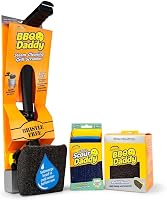
Scrub Daddy’s BBQ Daddy kit includes a bristle-free brush, a built-in scraper, and steel scour sponges. It is designed for grills, griddles, and cookware, but check your indoor grill’s manual before using the scraper or scouring pads on its plates.
A brush made for one grill may not suit another. For model-specific steps, read how to clean a Ninja Foodi grill or how to clean a George Foreman grill.
How do you clean the grill housing safely?
Wipe the exterior housing with a damp cloth and keep moisture away from electrical parts. Don’t spray cleaner directly onto the grill or immerse the appliance.
Remove crumbs and grease around the lid and edges with a soft cloth. If you need to reach a narrow gap, use a cloth wrapped around a utensil only if that won’t scratch the surface or push debris into the appliance.
Dry the housing before plugging the grill back in. If grease has entered a vent, control, or other opening, check the manual or contact the maker instead of pouring cleaner into it.
Indoor electric grills heat food with electric elements, so protect their cords and controls while cleaning. See how indoor electric grills work for more on their basic design.
When should you use a grill cleaner instead of soap?
Use dish soap for routine washing and a specialty grill cleaner only when the manual permits one. Match the cleaner to the surface and follow its directions carefully.
Zep Heavy-Duty Oven and Grill Cleaner is described for grills and for stainless steel, porcelain, and ceramic surfaces. Those uses don’t mean it is suitable for every indoor grill, so confirm compatibility before applying it.
If you use an approved spray, keep it off the cord, controls, and any surface not named in its directions. Wipe or rinse as directed, then let all parts dry before cooking.
What should you avoid when cleaning an indoor grill?
Avoid soaking the whole appliance, scraping coatings with metal, and using an unapproved chemical cleaner. These shortcuts can damage surfaces or expose electrical parts to water.
Don’t assume a removable-looking plate is dishwasher-safe. Don’t mix cleaning products, and never leave cleaner residue on a cooking surface before use.
For built-in models, follow the installation and care instructions closely. Our built-in indoor grill maintenance tips cover routine upkeep for that setup.
How do you keep an indoor grill easier to clean?
Empty the grease tray and remove loose food after each cooking session, once the grill is unplugged and cool. Regular light cleaning gives grease less time to harden.
Keep a soft cloth and the manual-approved cleaning tools near the grill. Wash and dry removable parts before returning them to the appliance.
Clean brushes after use too, and replace any damaged tool. These guides explain how to clean a grill brush and how to use a wire brush to clean a grill; follow your grill maker’s advice before using either type on indoor plates.
For a routine clean, use soap and a soft cloth on approved removable parts, then wipe and dry the housing. Choose a specialty cleaner only when its directions and your grill manual agree on the surface and method.
Frequently asked questions
Can you wash indoor grill plates in the sink?
Wash removable grill plates in the sink only if the grill manual says they are washable. Use warm water and dish soap, then rinse and dry them fully; don't immerse plates that contain electrical parts or coatings the manual says to protect.
Can you use oven cleaner on an indoor grill?
Use an oven or grill cleaner only if its directions and your grill manual allow it for that surface. Keep sprays away from electrical parts, food-contact areas not approved for the cleaner, and non-removable coatings; rinse or wipe as directed before cooking again.
How do you clean a grill top without scratching it?
Wait until the grill top is cool, then use a soft damp cloth or a non-abrasive tool approved by the manual. Lift residue with gentle pressure and avoid metal tools or harsh pads unless the grill maker specifically approves them for that surface.
How often should you clean an indoor grill?
Wipe crumbs and grease from an indoor grill after each use, once it is unplugged and cool. Clean the plates and grease tray more fully when buildup appears or before it affects cooking, following the manual's care schedule and cleaning instructions.