How to Choose Indoor Grill Materials and Coatings
A non-toxic indoor grill starts with a clearly named cooking surface and coating. Compare the material, coating details, heat instructions, and care needs, then choose a surface that fits how you cook and clean.
On this page (9 sections)
- What should you check on a non-toxic indoor grill?
- Which indoor grill materials have different care needs?
- Is nonstick the same as non-toxic?
- What does “non-toxic” tell you about coatings?
- How do heat and wear affect your choice?
- Which three products show different grill materials?
- How do you compare stainless steel and porcelain?
- How should you care for each surface?
- How do you choose a non-toxic indoor grill?
A non-toxic indoor grill should identify its food-contact materials and clearly describe any coating. Compare those details with the heat and care instructions before choosing a grill.
If you want a permanent setup, see our guide to choosing a built-in indoor grill.
The phrase “non toxic” by itself is too broad to tell you what touches your food. Check the grill plate, grate, removable pans, and any coating separately.
This guide covers the questions to ask, the material trade-offs, and three examples with different surfaces. For the basics of heating and cooking, see how indoor electric grills work.
What should you check on a non-toxic indoor grill?
Check each food-contact surface and its coating, then match the care instructions to your habits. A material name without details about the finish may leave important questions unanswered.
Look for these details before you buy:
| Detail | What to check |
|---|---|
| Food-contact material | Stainless steel, cast iron, stone, or another named material |
| Coating | Whether there is a coating, what type it is, and which surface it covers |
| Chemical disclosure | A specific statement about PFAS, PFOA, or PTFE, if relevant |
| Heat guidance | The maker's temperature or use limits |
| Care | Hand washing, dishwasher guidance, utensils, and seasoning needs |
| Replaceable parts | Whether a worn or damaged cooking surface can be replaced |
A “PFAS-free” statement is useful only when you know which part it describes. If it refers to an accessory dish, do not extend that statement to a separate grill plate.
Check the care guide before choosing a surface. A material that suits your cooking may be a poor fit if its cleaning or seasoning needs are hard to keep up with.
Which indoor grill materials have different care needs?
Stainless steel, cast iron, and stone have different surface and care characteristics. The best fit depends on the finish, the grill design, and how much upkeep you want to do.
| Surface | What to consider | Care questions |
|---|---|---|
| Stainless steel | A metal surface that may be bare or finished | Are abrasives allowed, and can the grate or plate be removed? |
| Cast iron | Heavy metal that holds heat and may be seasoned | Does it need hand washing, drying, and oiling? |
| Stone | A solid surface that may be reversible or paired with other parts | What cleaning method does the maker allow? |
| Nonstick coating | A coating that can make food release and cleanup easier | What chemicals are disclosed, and which utensils are safe? |
| Ceramic coating | A coating type that still needs product-specific details | What heat and cleaning limits apply? |
Do not treat “ceramic” as a complete disclosure. Ask whether it names a coating on the cooking surface or a separate stone or accessory.
For a direct surface comparison, read stainless steel vs porcelain grill grates. If you're choosing between two metal surfaces, our cast iron grill vs stainless steel comparison covers their different upkeep and cooking traits.
Is nonstick the same as non-toxic?
No. “Nonstick” describes food release, not the full material or chemical disclosure.
Find out what the coating is made from and which parts it covers.
Some product descriptions name a specific chemical exclusion, such as PFAS-free, PFOA-free, or PTFE-free. Those terms describe different claims, so check the wording rather than treating them as interchangeable.
Also check whether the cooking surface is coated, seasoned, or bare metal. A naturally seasoned cast-iron surface, for example, uses oil as its finish, while a coated surface has a separate layer that may need different care.
A surface can be described as nonstick without explaining its composition. If you cannot find a clear description, contact the manufacturer before relying on a broad marketing phrase.
What does “non-toxic” tell you about coatings?
The phrase does not tell you the coating's ingredients or its heat limits. Look for product-specific language that identifies the coating and any substances the manufacturer says it excludes.
Use a careful checklist:
- Identify the exact part described as coated.
- Look for a named coating type and specific chemical disclosures.
- Check the instructions for heat, utensils, and cleaning.
- Contact the manufacturer if the language is unclear or incomplete.
Avoid assuming that a claim about a removable pan also applies to a grill plate. The best nonstick electric grills guide can help compare models that use nonstick surfaces, while this guide focuses on what to verify in their material disclosures.
How do heat and wear affect your choice?
Choose a grill surface that fits its stated heat limits and that you can maintain. Wear, damage, or ignored care instructions can change how a surface performs over time.
Follow the maker's limits for preheating, temperature settings, utensils, and cleaning products. Stop using a surface if it is damaged, peeling, or flaking, and check whether the maker offers a replacement part.
Do not scrape a coated surface with tools the care guide forbids. For cast iron, dry it fully after washing and follow the seasoning directions to help protect it from rust.
If you see rust, identify which part is affected and consult the grill maker's instructions before cooking. Our guide to cooking on rusty grill grates explains what to consider.
Which three products show different grill materials?
These examples use a plated steel grate, seasoned cast iron, and a granite stone top. They show why you should compare each food-contact part and its care needs instead of relying on a single “non-toxic” label.
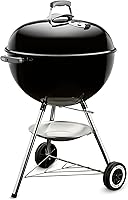
Weber Original Kettle: plated steel grate
The Weber Original Kettle is an outdoor charcoal grill, so it is not an indoor electric grill. Its durable-plated steel cooking grate offers one example of a metal grate, while its porcelain-enameled lid and bowl are separate parts from the cooking surface.
If you are comparing metal grate options, see our guide to stainless steel vs cast iron grill grates. For long-term ownership factors, read how long indoor grills last.
Lodge Square Cast Iron Grill Pan: seasoned cast iron
The Lodge Square Cast Iron Grill Pan is a stovetop grill pan that can also be used in ovens, on grills, and over campfires. Lodge describes its finish as made with iron and oil, and says it is free from PFOA, PTFE, and PFAS.
Cast iron is heavy and needs hand washing. Lodge's care instructions say to hand wash; dry the pan after cleaning and follow seasoning guidance to maintain its surface.
Swissmar Stelvio Raclette: granite stone top
The Swissmar Stelvio Raclette includes a granite grill plate and nonstick raclette dishes. Its description also mentions ceramic-coated dishes, so treat the stone top and the small dishes as different food-contact parts.
Before choosing it, check the instructions for cleaning the granite and for care of the dishes. Do not assume the description of the dishes applies to the granite plate.
How do you compare stainless steel and porcelain?
Stainless steel and porcelain describe different surface materials or finishes, so check how each is used on the grill. A grate may be steel with a coating, while porcelain can refer to an enamel finish on a different component.
Compare the exact part that contacts food, how the finish is applied, and the care instructions. Our best stainless steel indoor grills guide focuses on stainless steel options, and our best ceramic indoor grills guide covers models described as ceramic.
For a panini press, also confirm whether the cooking plates themselves are coated and what tools the maker permits. See best ceramic panini grills for options in that style.
How should you care for each surface?
Follow the care instructions for the exact grill part you are cleaning. The same cleaning tool or soap may not suit a seasoned pan, coated plate, and stone top.
- Stainless steel: Check whether the maker allows abrasive pads or dishwasher cleaning.
- Cast iron: Hand wash when instructed, dry fully, and maintain seasoning as directed.
- Coated surfaces: Use only the utensils and cleaners allowed by the maker.
- Stone: Confirm whether it needs cooling before cleaning and which products are safe.
Avoid sudden temperature changes if the maker warns against them. Let hot removable parts cool before washing unless the instructions say otherwise.
Cleaning also affects how long the grill stays useful. Compare replacement options and upkeep in our best long lasting indoor grills guide.
How do you choose a non-toxic indoor grill?
Choose a non-toxic indoor grill by matching its disclosed food-contact surface to your cooking and care routine. Favor clear coating details and instructions you can follow consistently.
Pick cast iron if you want a seasoned surface and accept hand washing and upkeep. Choose a coated electric grill when its coating is clearly described and its care rules suit your kitchen.
Consider stone if the maker explains how to clean and use the surface.
For more models that emphasize a ceramic cooking surface, compare our best ceramic indoor grill options. The right choice is the one whose surface, coating disclosure, heat guidance, and care requirements are clear before you buy.
Frequently asked questions
What does non-toxic mean for an indoor grill?
The phrase alone does not identify the cooking surface or its coating. Check the materials for each food-contact part, and look for specific statements about substances such as PFAS, PFOA, or PTFE.
Confirm that the statement applies to the grill surface you plan to use.
Is stainless steel a non-toxic grill surface?
Stainless steel is a metal cooking surface, but the material name alone does not describe every part of a grill or any added coating. Check which parts touch food, whether the surface has a finish, and what care and heat instructions apply.
Is cast iron a good choice for indoor grilling?
Cast iron can suit indoor grilling if you can manage its weight and follow its care needs. A seasoned surface relies on oil rather than a synthetic nonstick layer, but it needs hand washing and drying to help prevent rust.
How can I tell whether a grill coating is PFAS-free?
Look for a clear statement that names the coating and says it is PFAS-free. If the wording only describes one included part, do not assume it covers every cooking surface or accessory.
Check care instructions too, since abrasive cleaning can damage some finishes.
Do ceramic-coated grills need special care?
Care depends on the specific grill and coating. Read the maker's instructions for utensils, heat limits, cleaning products, and whether parts are dishwasher safe.
Avoid assuming that every ceramic-coated surface has the same care requirements.